
Top 5 Leathercenter.co.uk Alternatives in 2026
February 7, 2026
How long do leather menu covers really last in restaurants
February 9, 2026
Keeping pace with guest demands in London’s luxury sector has never been more complex. By 2026, a new era is emerging where technological innovation meets purposeful design and sustainability, reshaping what guests expect at every touchpoint. This overview brings together leading research on the five transformative trends luxury venues must understand to remain relevant and memorable as competition intensifies and expectations for human-centric, adaptive experiences reach new heights.
Table of Contents
- Defining 2026 Hospitality Trends And Influences
- Technology, AI, And Personalisation In Practice
- Sustainable Materials And Responsible Sourcing
- Design, Decor, And Experiential Concepts
- Regulatory Changes And Operational Impacts
- Integrating Luxury Accessories For Guest Experience
Key Takeaways
| Point | Details |
|---|---|
| AI Integration | Luxury venues should deploy AI to personalise guest experiences, ensuring seamless and intuitive engagement. |
| Sustainability Focus | Implementing net-positive environmental practices is crucial for competitive advantage and meeting guest expectations. |
| Human-Centred Leadership | Prioritising staff and guest wellbeing fosters a deeper personal connection essential for luxury hospitality. |
| Immersive Experience Design | Creating emotionally resonant guest journeys through technology-enhanced environments is key to memorable stays. |
Defining 2026 Hospitality Trends And Influences
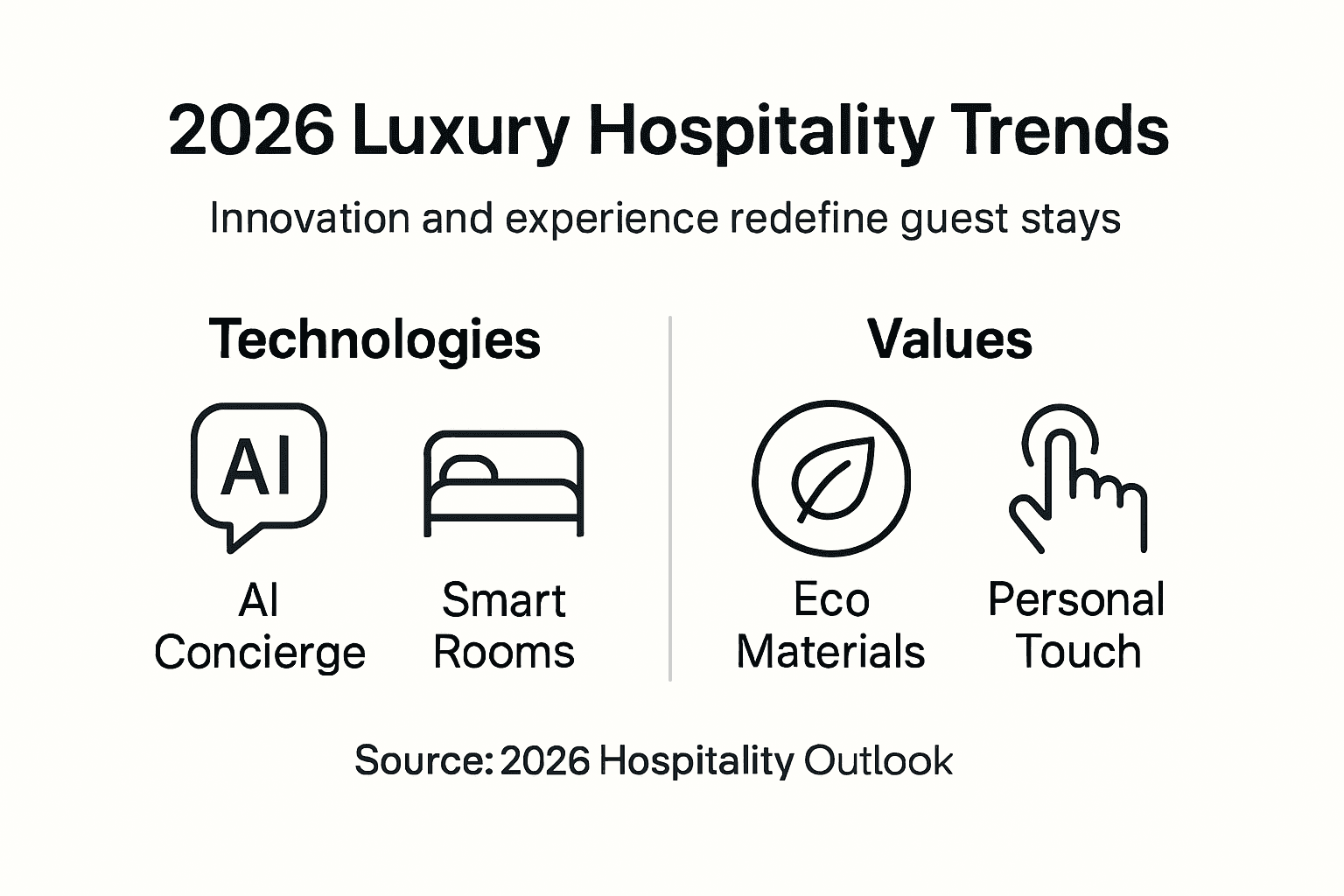
The hospitality landscape in 2026 represents a transformative era where technological innovation, sustainability, and human-centric design converge to redefine luxury experiences. Strategic hospitality trends are shifting dramatically, presenting unprecedented opportunities for luxury venues to reimagine guest interactions.
Five critical trends are emerging as primary drivers of hospitality transformation:
- Artificial Intelligence Integration: Advanced AI agents capable of personalising guest experiences
- Sustainability Focus: Net-positive environmental practices becoming fundamental
- Immersive Experience Design: Technology-enhanced, emotionally resonant guest journeys
- Regenerative Hospitality Models: Venues creating tangible social and ecological value
- Human-Centred Leadership: Empathetic operational approaches prioritising staff and guest wellbeing
These trends reflect a profound shift from traditional service models towards more holistic, intelligent, and purposeful hospitality ecosystems. Emerging hospitality innovations are not merely technological upgrades but represent fundamental reimaginings of guest interactions, operational philosophies, and organisational values.
Luxury venues must now think beyond aesthetic appeal, integrating sophisticated technological solutions with genuine human connection. The future demands venues that are simultaneously high-tech and deeply empathetic, creating experiences that feel personalised, meaningful, and transformative.
The table below contrasts traditional and emerging hospitality approaches:
| Aspect | Traditional Model | 2026 Emerging Approach |
|---|---|---|
| Service Delivery | Standardised, process-driven | Personalised, adaptive |
| Design Philosophy | Aesthetic emphasis | Holistic, experiential focus |
| Sustainability | Minimal integration | Core operational pillar |
| Technology Adoption | Incremental upgrades | Integrated, strategic use |
Here is a summary of how 2026 hospitality trends reshape luxury venues:
| Trend Driver | Key Transformation | Guest Impact |
|---|---|---|
| AI Integration | Hyper-personalisation of services | Seamless, intuitive engagement |
| Sustainability Focus | Net-positive operations | Increased eco-conscious appeal |
| Immersive Design | Emotional journey curation | Memorable, multisensory stays |
| Regenerative Models | Social and ecological initiatives | Authentic, purpose-led luxury |
| Human-Centred Leadership | Staff and guest wellbeing focus | Elevated personal connection |
Pro tip: Invest in staff training programmes that blend technological literacy with emotional intelligence to effectively navigate these emerging hospitality trends.
Technology, AI, And Personalisation In Practice
The evolution of artificial intelligence in hospitality represents a profound shift from technological novelty to strategic operational imperative. AI-driven personalisation is transforming how luxury venues understand, anticipate, and fulfil guest expectations with unprecedented precision and sophistication.
Key practical applications of AI in hospitality include:
- Predictive Guest Preferences: Using machine learning to analyse past behaviours and create hyper-personalised recommendations
- Intelligent Room Customisation: Automated environmental controls adjusting temperature, lighting, and amenities based on individual guest profiles
- Conversational AI Concierge: Advanced chatbots providing 24/7 multilingual support and instantaneous guest service
- Operational Efficiency: Streamlining backend processes like inventory management and staff scheduling
- Emotional Intelligence Algorithms: Systems designed to detect and respond to guest mood and satisfaction levels
These technological innovations extend far beyond mere convenience, representing a fundamental reimagining of guest interaction. Hyper-personalisation strategies are carefully balanced between technological capability and ethical considerations, ensuring guest trust remains paramount.
Navigating this technological landscape requires a nuanced approach that prioritises human connection alongside digital innovation. Luxury venues must view AI not as a replacement for personal service, but as a sophisticated tool to enhance and elevate human interactions.
Pro tip: Implement AI technologies incrementally, always maintaining a clear human touchpoint to preserve the emotional authenticity of guest experiences.
Sustainable Materials And Responsible Sourcing
Sustainability has transitioned from a corporate buzzword to an operational imperative for luxury hospitality venues in 2026. Responsible sourcing strategies are now fundamental to maintaining competitive advantage, driving meaningful environmental impact and meeting increasingly sophisticated guest expectations.
Key sustainable material considerations include:
- Circular Material Economy: Prioritising recyclable, regenerative materials with minimal environmental footprint
- Local Procurement: Sourcing materials from regional suppliers to reduce transportation emissions
- Traceable Supply Chains: Implementing blockchain technologies for complete ingredient and material transparency
- Renewable Resource Selection: Choosing materials derived from rapidly renewable sources like bamboo, hemp, and reclaimed wood
- Carbon Neutrality: Selecting materials and production processes that minimise or offset carbon emissions
The integration of sustainability extends beyond material selection into comprehensive operational philosophies. Smart sustainability technologies are enabling venues to create holistic approaches that simultaneously reduce environmental impact and enhance guest experiences.
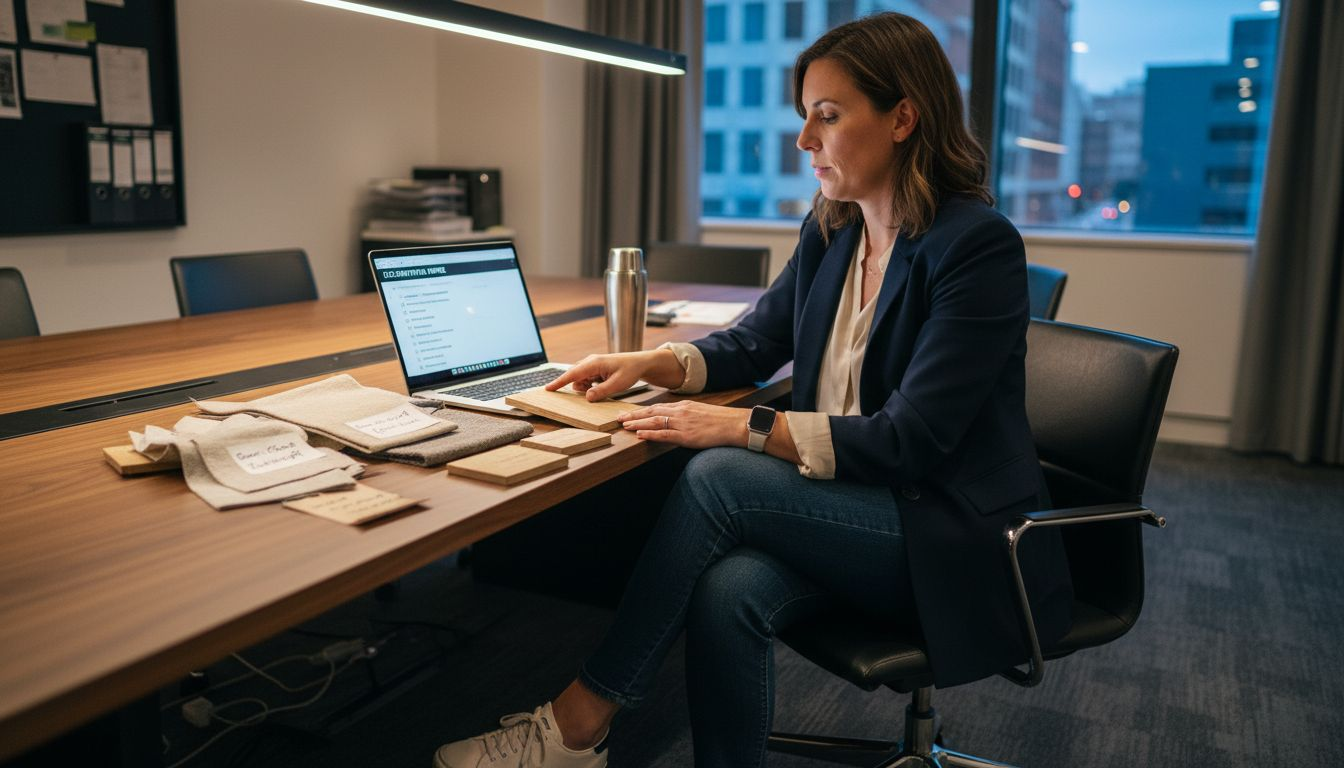
Ultimately, responsible sourcing represents more than an environmental strategy—it’s a fundamental reimagining of hospitality’s relationship with global ecosystems, demonstrating that luxury and sustainability are not mutually exclusive but deeply interconnected principles.
Pro tip: Conduct a comprehensive sustainability audit of your material sourcing, identifying opportunities for incremental improvements that align with both environmental goals and guest expectations.
Design, Decor, And Experiential Concepts
Luxury hospitality venues in 2026 are reimagining design as a holistic, immersive narrative that transcends traditional aesthetic boundaries. Experiential design concepts are transforming guest interactions through multisensory environments that engage, surprise, and create lasting emotional connections.
Key design and decor innovations include:
- Adaptive Spatial Technologies: Modular spaces that dynamically reconfigure for different guest needs
- Wellness-Oriented Environments: Integrating biophilic design, natural materials, and stress-reduction elements
- Digital Immersion Installations: Large-format interactive displays and augmented reality experiences
- Cultural Narrative Spaces: Decor that tells local stories and connects guests with regional heritage
- Sensory Design Elements: Carefully curated textures, lighting, and acoustic experiences that stimulate multiple senses
These design strategies reflect a profound shift towards guest-centric hospitality environments that blur the lines between physical spaces, digital interactions, and personal experiences. Modern luxury is no longer about opulence, but about creating meaningful, personalised journeys that resonate on emotional and intellectual levels.
The future of hospitality design demands a delicate balance between technological innovation and human-centred experiences, where every architectural and decorative choice serves to enhance guest connection and wellbeing.
Pro tip: Conduct regular guest feedback sessions to understand evolving preferences, allowing your design strategy to remain dynamic and responsive.
Regulatory Changes And Operational Impacts
The hospitality industry in 2026 is experiencing a fundamental transformation driven by increasingly complex regulatory landscapes and operational requirements. Operational standards evolution is reshaping how luxury venues approach compliance, workforce development, and strategic planning.
Critical regulatory and operational shifts include:
- Digital Compliance Documentation: Implementing dynamic, real-time regulatory tracking systems
- Workforce Training Reforms: Developing adaptive learning programmes that respond to emerging industry standards
- Sustainability Regulatory Frameworks: Integrating comprehensive environmental and social governance requirements
- Technological Compliance Infrastructure: Creating robust digital platforms for regulatory monitoring and reporting
- Agile Operational Methodologies: Developing flexible standard operating procedures that can rapidly adapt to changing regulations
These transformations represent more than administrative updates—they signal a profound reimagining of organisational resilience and strategic responsiveness. Luxury venues must now view regulatory compliance as a dynamic, integrated aspect of their operational philosophy, rather than a mere checkbox exercise.
Successful navigation of this complex landscape demands a proactive, holistic approach that combines technological innovation, continuous staff education, and a genuine commitment to meeting evolving industry standards and guest expectations.
Pro tip: Establish a dedicated compliance innovation team responsible for continuously monitoring regulatory shifts and developing adaptive operational strategies.
Integrating Luxury Accessories For Guest Experience
Luxury hospitality in 2026 transcends traditional service models, with curated accessories becoming pivotal in crafting deeply personalised guest experiences. Luxury accessory integration represents a sophisticated approach to creating memorable, emotionally resonant interactions that go far beyond mere aesthetic appeal.
Key strategies for luxury accessory implementation include:
- Personalised Wellness Offerings: Bespoke wellness products tailored to individual guest preferences
- Cultural Artefact Curation: Locally sourced accessories that tell authentic regional narratives
- Ambient Intelligence Systems: Advanced technological accessories that adapt to guest behaviour
- Sustainable Material Selection: High-end accessories crafted from environmentally responsible materials
- Multisensory Experience Design: Accessories that engage multiple sensory experiences
These meticulously curated accessories are not mere decorative elements but powerful storytelling tools. Luxury hospitality accessories now serve as conduits for creating deeply personal, immersive environments that speak directly to individual guest expectations and emotional landscapes.
Successful integration demands a holistic approach where every accessory is intentionally selected to enhance guest comfort, reflect venue identity, and create moments of unexpected delight. The most exceptional luxury venues understand that true personalisation lies in the nuanced details.
Pro tip: Develop a comprehensive accessory strategy that balances technological innovation, cultural authenticity, and individual guest preferences.
Elevate Your Hospitality Experience with Bespoke Leather Craftsmanship
As the hospitality industry embraces innovation and sustainability in 2026, venues face the challenge of blending cutting-edge technology with tactile luxury that speaks directly to guests’ emotional and sensory needs. This article highlights critical trends such as human-centred design, immersive experiences, and responsible sourcing—all areas where the choice of decor and accessories profoundly impacts guest satisfaction and brand identity.
At Leathera.co.uk, we understand that delivering personalised, high-quality elements like menu covers, room accessories, and bill presenters can transform how guests connect with your venue. Our handcrafted leather products are designed to align with emerging trends by combining premium craftsmanship and sustainable sourcing to support your commitment to eco-conscious luxury. Explore how our customised pieces enhance operational efficiency while providing the warm, authentic touch that technology alone cannot replace.
Discover the full range of exclusive, durable accessories crafted for luxury venues at Leathera.co.uk. See why top hospitality professionals trust us to help create emotionally resonant guest journeys.
Enhance every detail of your space with bespoke leather solutions designed for 2026’s hospitality future.
Ready to raise your venue’s luxury standard? Explore our handcrafted collection today
Visit Leathera.co.uk now to elevate your guest experience with timeless leather accessories that combine sustainability and sophistication. Take the first step towards personalised, environmentally responsible luxury that speaks volumes about your brand.
Frequently Asked Questions
What are the key trends reshaping luxury hospitality in 2026?
The main trends include Artificial Intelligence integration for personalised guest experiences, a strong focus on sustainability, immersive experience design, regenerative hospitality models, and a human-centred approach to leadership.
How is AI transforming guest experiences in luxury venues?
AI is enabling hyper-personalisation by predicting guest preferences, customising room environments, providing 24/7 conversational support, and enhancing operational efficiency, which collectively improves guest satisfaction and engagement.
What role does sustainability play in the hospitality industry in 2026?
Sustainability has become a core operational pillar, with venues prioritising responsible sourcing, circular material economies, and initiatives aiming for carbon neutrality, which resonate well with eco-conscious guests.
How is design evolving in luxury hospitality?
Design is becoming more experiential and holistic, focusing on creating multisensory environments that engage guests on emotional levels, integrating adaptive space technologies, and incorporating elements that reflect local culture and heritage.
Recommended
- 7 Sustainable Hospitality Tips for Luxury Venues – LEATHERA
- Step-by-Step Guide to Bespoke Hospitality Accessories – LEATHERA
- Top 5 Leathercenter.co.uk Alternatives in 2026 – LEATHERA
- How to Enhance Restaurant Ambience with Leather Decor – LEATHERA
- Event Drinks Display Trends: Raising Standards in London
- Luxury Property Management Guide for Vacation Rentals