

Bespoke leather hospitality accessories for luxury hotels, restaurants and cocktail bars
June 3, 2026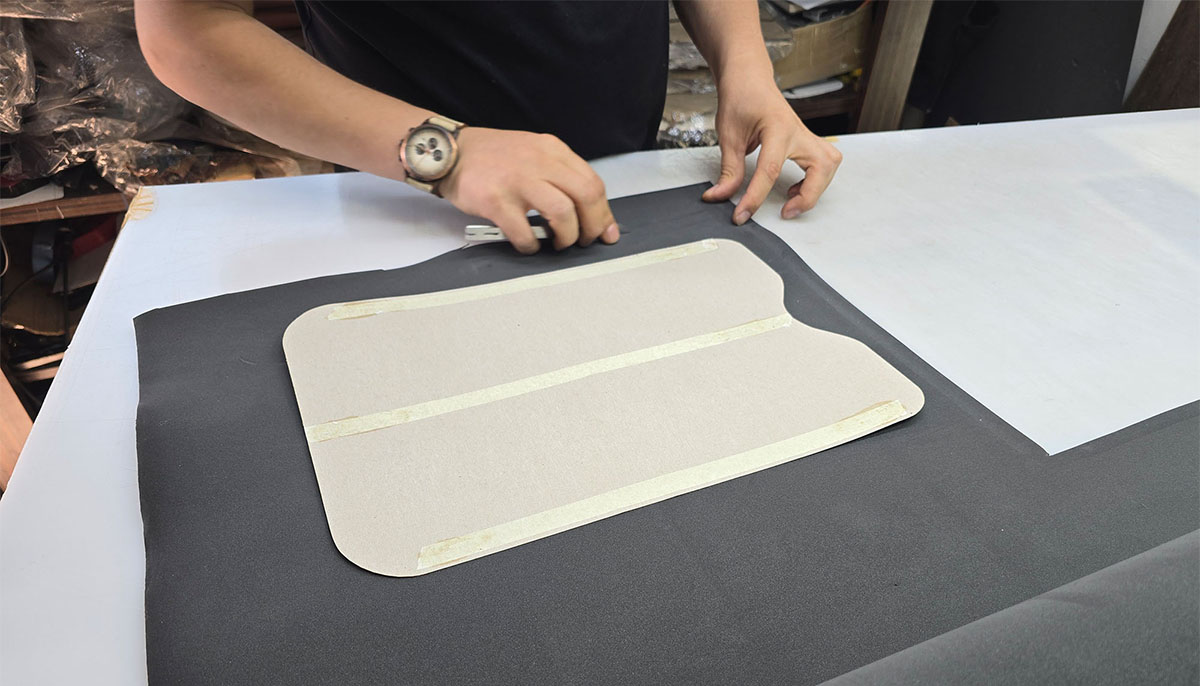
Inside the craft: How bespoke leather accessories are made for luxury hotels and restaurants
A behind-the-scenes look at how Leathera turns raw leather into bespoke hospitality accessories for London's most demanding hotels, bars and restaurants.
In luxury hospitality, quality is often communicated before a single word is spoken. A guest lifts a menu. A cocktail arrives on a leather coaster. The bill is presented in a carefully finished folder. Each of these moments is small on its own, yet together they shape how a hotel, restaurant or bar is remembered.
That is why bespoke leather hospitality accessories are about far more than adding a logo to an existing product. Leather selection, cutting, construction, stitching, edge finishing and branding all influence how the finished piece looks, feels and performs during years of daily service.
At Leathera, bespoke means building a product around the venue, rather than asking the venue to adapt to something off the shelf. Here is what actually happens behind the scenes, from first brief to finished piece.
Step one: it starts with the venue, not the product
There is no single menu cover, bill folder or coaster that suits every hospitality environment. A contemporary restaurant may want something minimal and architectural. A five-star hotel may prefer traditional leather with understated branding. A cocktail bar may want an unusual colour, shape or texture that becomes part of its identity.
This is why the first stage of any bespoke project is understanding exactly where and how the product will be used. Dimensions, material, colour, construction, page capacity, stitching, edge finish and branding are all considered individually, before production ever begins. A menu cover that needs to survive constant page changes simply has different requirements to a bill folder that gets handled hundreds of times a week.
The objective is simple: the finished product should look as though it was designed as part of the venue from day one.
Choosing the right leather
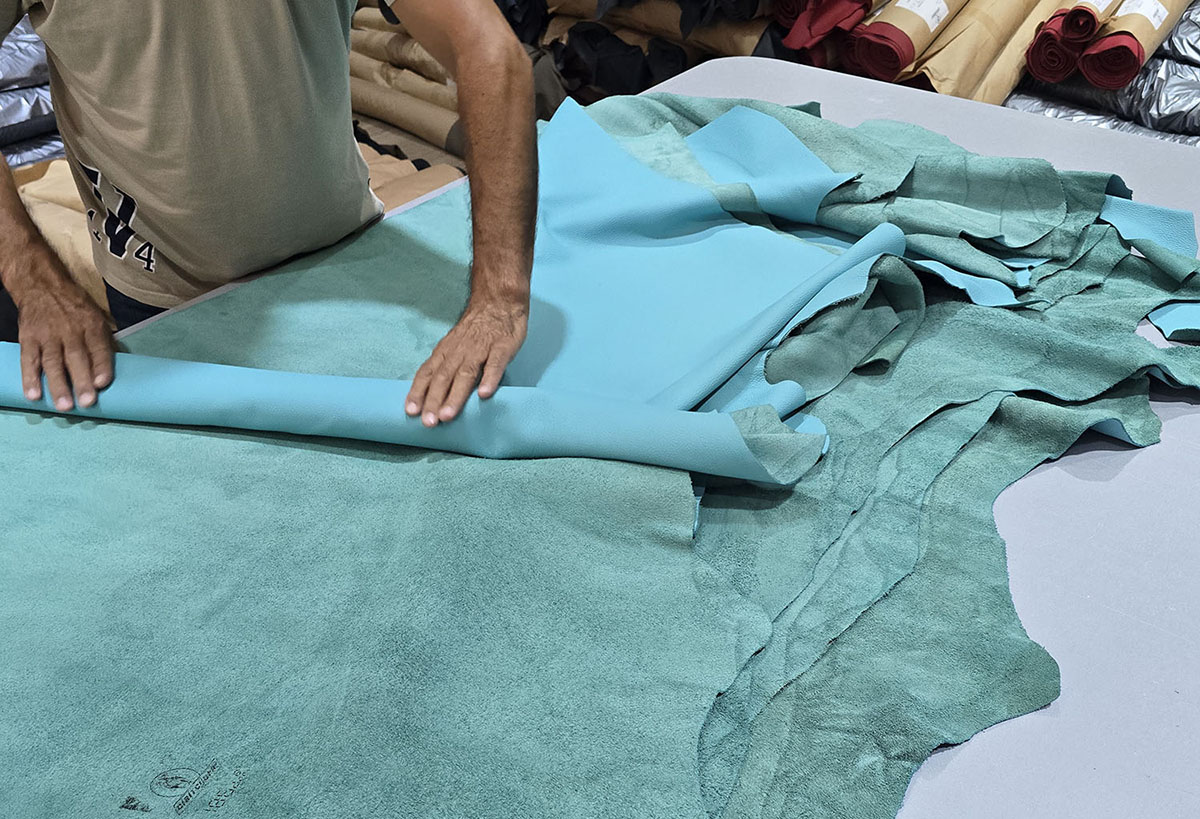
Leather is not simply a colour choice. Grain, softness, thickness and finish can completely change the character of a finished product. Smooth leather creates a restrained, contemporary look. Pebbled leather introduces visible texture. Saffiano-style finishes give a structured surface, while other grains produce an entirely different feel.
For hospitality products, material choice also has a practical side. Menus, bill folders and coasters are working objects, touched repeatedly, stacked, cleaned and moved between tables throughout service. The leather has to balance appearance with the demands of that environment.
Genuine leather also carries something synthetic materials cannot fully replicate: individuality. The subtle variation in natural grain is part of what gives a bespoke piece its character, and for a luxury hospitality interior, that tactile quality matters.
Precision cutting: Where craftsmanship begins
Once a design is finalised and the leather selected, production starts with careful measurement and cutting. Precision at this stage is critical. A difference of only a few millimetres becomes obvious once components are folded, layered, stitched and assembled, particularly on geometric products such as menu covers, document folders and bill presenters, where clean alignment is essential.
Depending on the design, the leather may be combined with structural components and interior materials to achieve the right rigidity and feel. A menu should feel substantial in a guest's hands without being unnecessarily heavy. A bill folder should hold its form while remaining comfortable to handle. Getting that balance right is part of the craft.
Construction: Turning individual pieces into a finished object
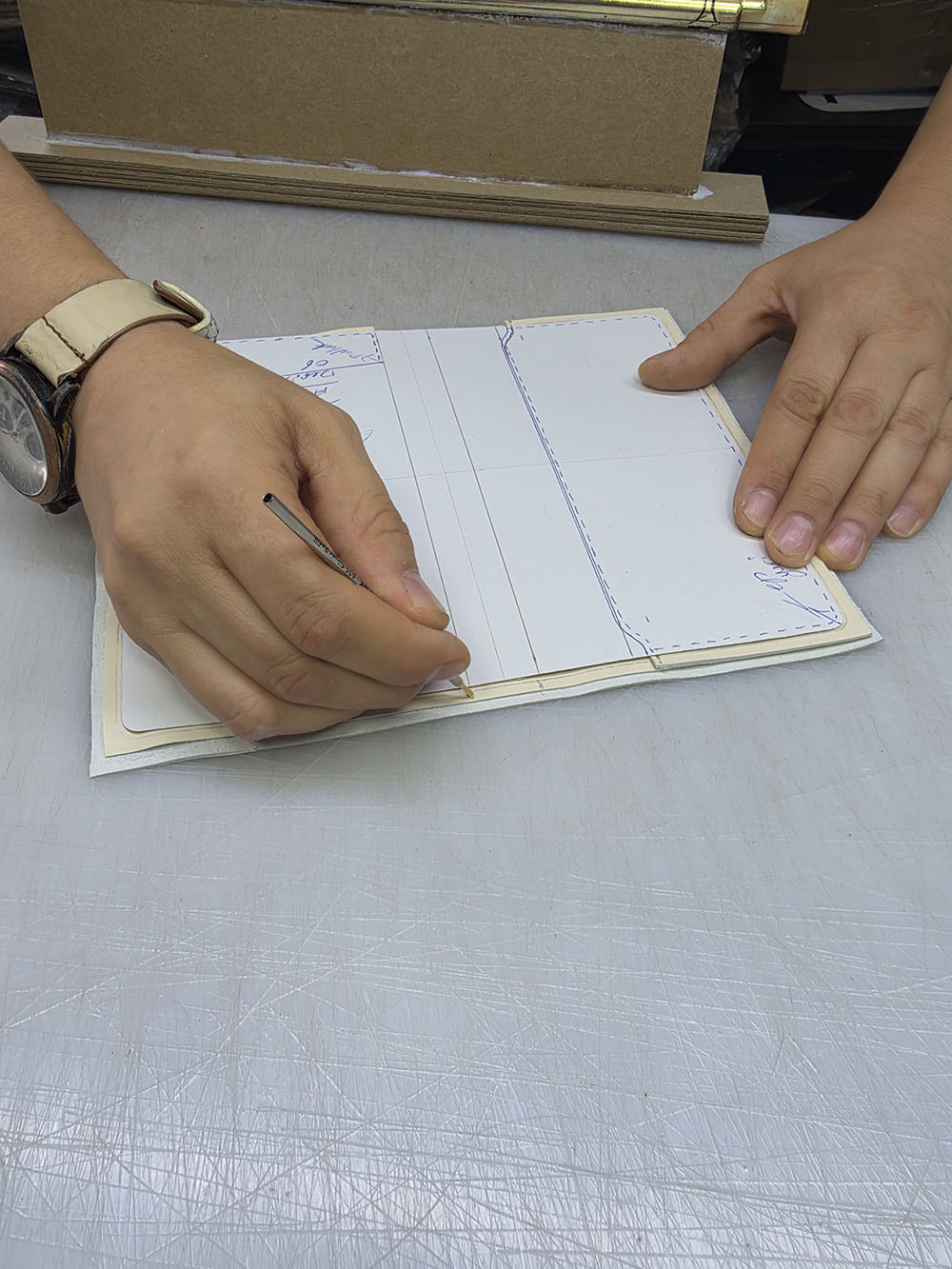
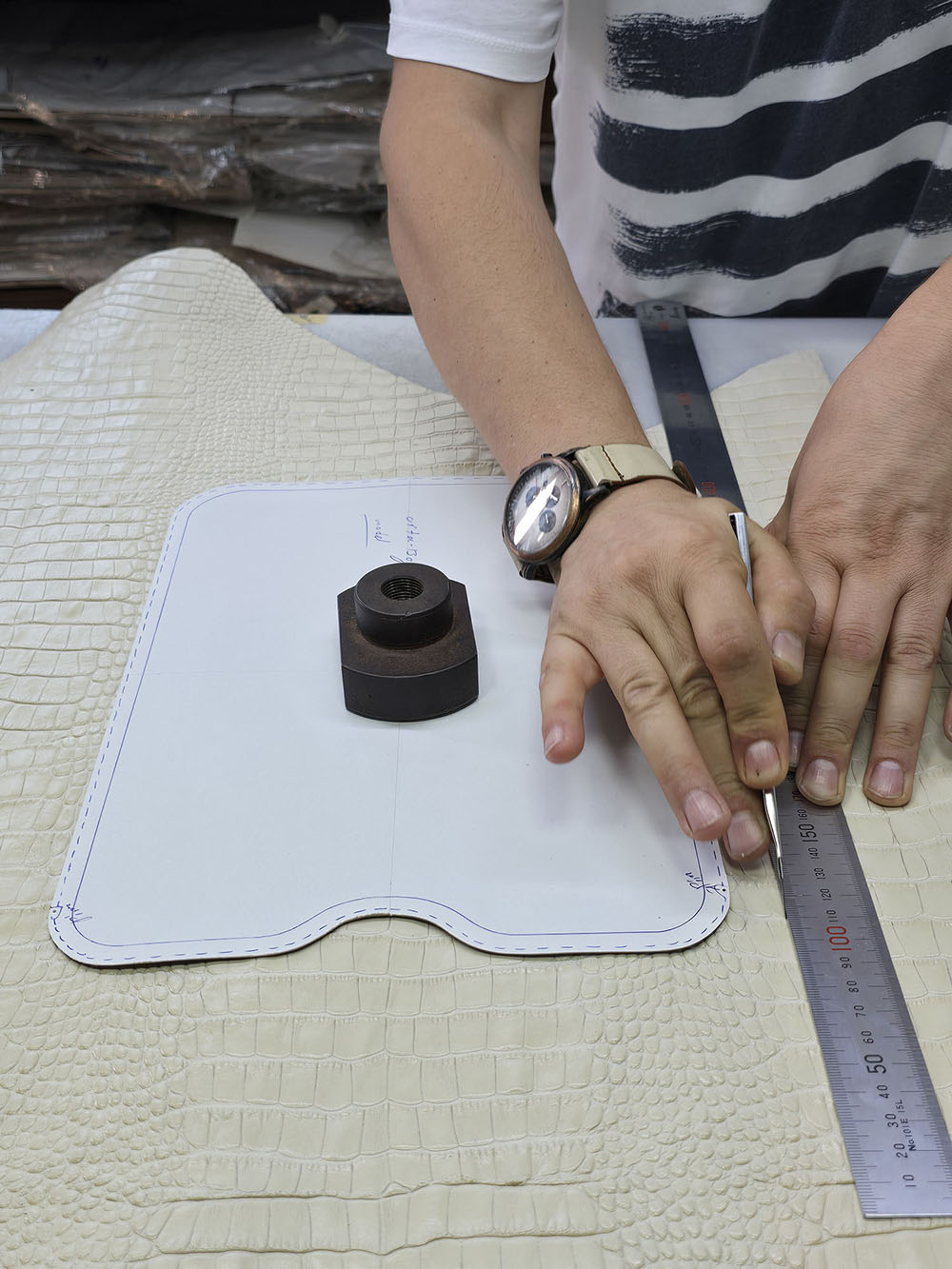
The simplicity of a finished leather accessory can disguise how many operations went into producing it. Individual components are positioned accurately, folds formed, corners prepared, internal structures incorporated and layers aligned before anything is permanently assembled.
Every product category needs its own construction method. A double-sided leather coaster is fundamentally different from an A4 menu cover. A magnetic menu, screw-bound wine list, bill presenter, desk accessory or presentation box each introduces its own technical requirements, and this is where bespoke manufacturing differs meaningfully from simply customising a stock item. The construction itself is developed around the intended use.
Stitching is part of the design
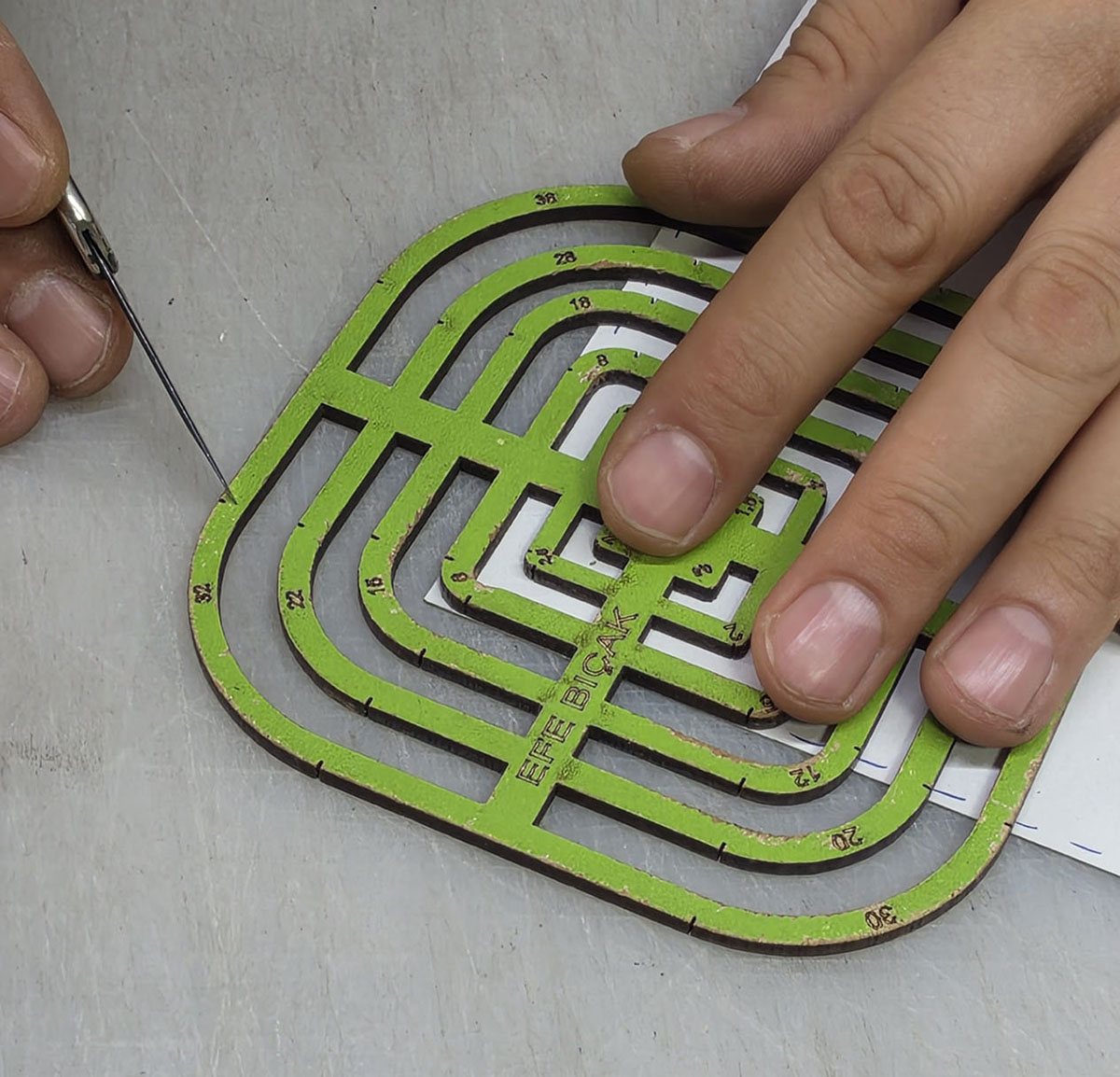
On a well-made leather product, stitching should look almost effortless. In reality it demands real consistency. Thread choice, stitch spacing, distance from the edge and treatment around corners all affect the finished appearance, and that consistency matters even more once multiple pieces are being produced for the same venue.
Stitching is functional, but it is also visual. A carefully positioned stitch line frames the product and reinforces its proportions. Thread can be chosen to blend discreetly into the leather, or to provide a deliberate contrast. The right choice depends on the overall design rather than a single formula.
Why edge finishing makes such a difference
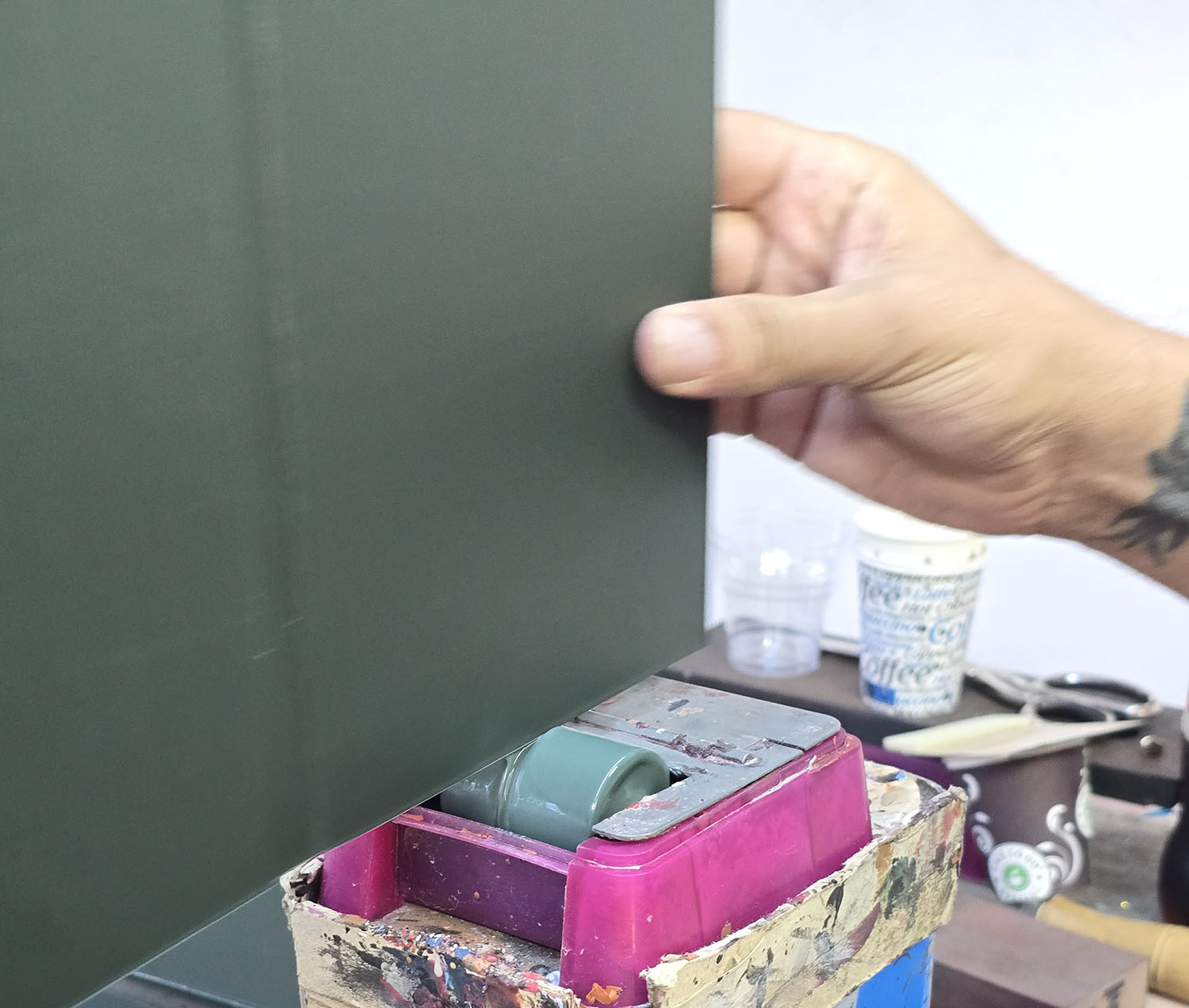
One of the easiest ways to tell a carefully made leather accessory from a basic one is the edge. Once components are cut and assembled, the exposed edges need finishing. For many of our hospitality products, the perimeter is carefully prepared and edge paint applied to create a smooth, sealed, refined finish, often across several stages of preparation.
It is painstaking work for a surface only a few millimetres wide. Yet when a guest holds a menu or bill folder, those few millimetres are directly visible. It's a recurring principle in luxury craftsmanship: the smaller the detail, the more its execution matters.
Branding should belong to the product
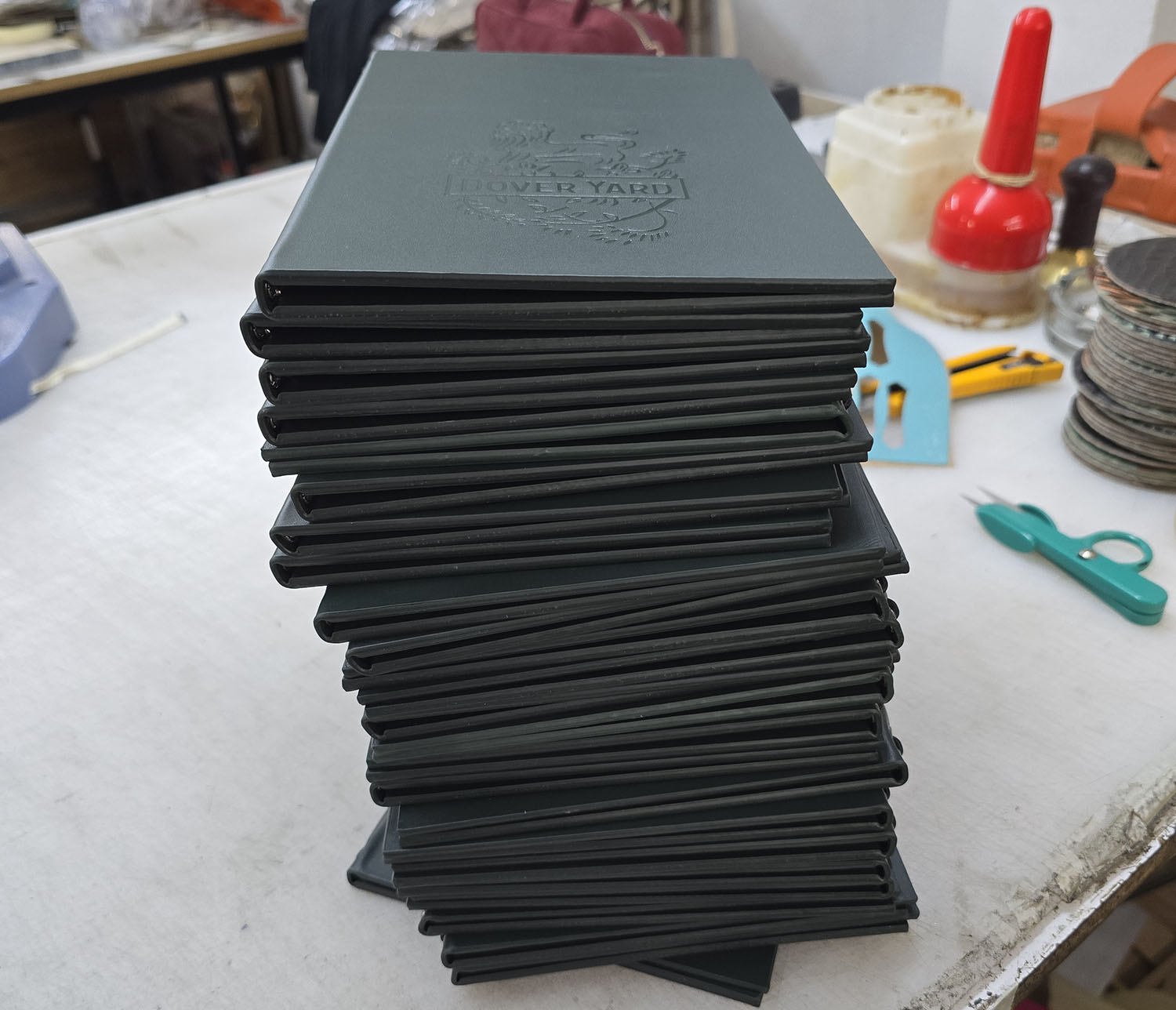
A luxury product does not necessarily need a large logo. Often the opposite is more effective. Branding can be introduced through blind debossing for a restrained impression in the leather, or with metallic foils such as gold or silver for a stronger visual accent, and more complex or multicoloured artwork can be reproduced with alternative printing techniques where appropriate. For traditional debossed or foil branding, a custom brass stamp is manufactured from the client's own artwork.
Technique is only part of the decision. Scale and positioning matter just as much. A small logo precisely placed on a beautifully proportioned menu can communicate far more sophistication than oversized branding. The aim is for a venue's identity to feel integrated into the object, not printed onto it as an afterthought.
Hand finishing and quality control
Production does not end at the final stitch. Every completed piece is examined as a whole:
- Are the edges consistent across the collection?
- Is the stitching straight and evenly spaced?
- Are the corners properly formed?
- Is the branding positioned correctly?
- Does the product open, close and sit as intended?
- Is the leather surface free from unwanted marks?
When producing a collection for a hospitality venue, consistency between individual pieces matters just as much as the quality of any single item. A guest may see one menu at a time, but a restaurant often sees dozens together during service, so quality control has to consider the collection as well as the individual piece.
Why does bespoke leather cost more than a mass-produced alternative?
It's a fair question. A mass-produced menu cover is manufactured in large quantities around one predetermined specification, and the customer chooses from what already exists. Bespoke production reverses that process.
A bespoke piece may require its own dimensions, leather, colour, internal construction, hardware, stitching specification, edge treatment and branding, with samples developed and refined before production even begins. There is also considerably more handwork involved in assembly, stitching, edge finishing and inspection.
The price difference, then, isn't simply the cost of the leather. It reflects the process required to create something specifically for one hospitality environment, and that matters at venues where every guest-facing detail, from furniture to glassware, has already been carefully considered.
From menu covers to fully bespoke collections
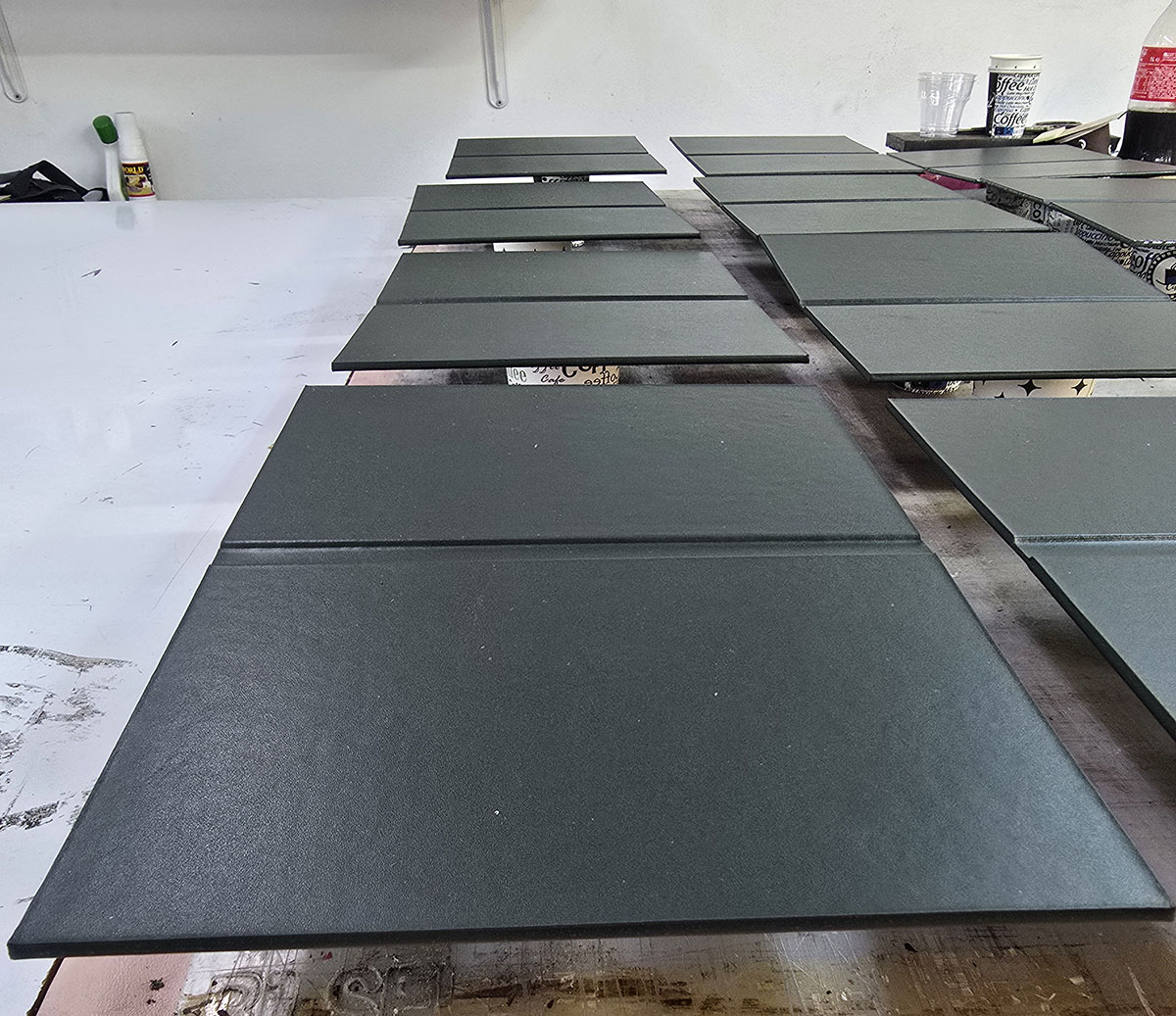
Although leather menu covers, bill folders and coasters are the most recognisable hospitality accessories, bespoke production doesn't need to stop at conventional formats. Wine lists, desk accessories, document folders, presentation pieces, table accessories, luggage tags, room accessories and other leather goods can all be developed around a specific requirement.
For interior designers, procurement teams, hotel operators and restaurateurs, this opens up an interesting possibility. Instead of sourcing unrelated accessories individually, a collection can share the same leather, colour palette, stitching and branding language, creating far greater visual consistency across the entire guest journey.
What should a hotel or restaurant consider before ordering bespoke leather?
Before starting a project, it helps to think through five questions:
- Where will the product be used?
- How frequently will it be handled?
- What does it need to contain or accomplish?
- Which materials complement the interior?
- How prominently should the brand appear?
The answers to these questions often determine the right construction more effectively than starting with appearance alone. A good bespoke supplier should be able to translate those requirements into concrete material and manufacturing decisions.
Frequently Asked Questions
Craftsmanship that becomes part of the venue
The paradox of good craftsmanship is that most of the work eventually becomes invisible. Guests will probably never know how many stages went into the menu in their hands, or notice that its edges were finished over several stages, its stitching set to a precise distance, or its logo struck from a custom-made stamp. They shouldn't have to.
The finished product should simply feel considered. That is what craftsmanship brings to hospitality: not decoration for its own sake, but physical details that reinforce the quality of the environment around them.
At Leathera, we create bespoke genuine leather products for luxury hotels, restaurants and bars, including menu covers, wine lists, bill folders, coasters and custom hospitality accessories developed around individual requirements. From material selection and prototyping through to production, branding and finishing, every project is approached as a product made for one particular venue, not adapted from a catalogue. In luxury hospitality, the details are never just details.
About Leathera
Leathera is a London-based leather studio specialising in bespoke hospitality accessories for luxury hotels, cocktail bars, restaurants and premium hospitality environments across London and Europe. The studio develops handcrafted menu covers, coasters, placemats, bill presenters, valet trays and fully bespoke hospitality accessories tailored specifically around each venue's identity and operational requirements. All bespoke projects are priced on request and typically delivered within 4–6 weeks.

