Role of Design in Guest Experience Excellence
February 20, 2026
6 Ways Premium Craftmanship Elevates Hospitality Spaces
February 22, 2026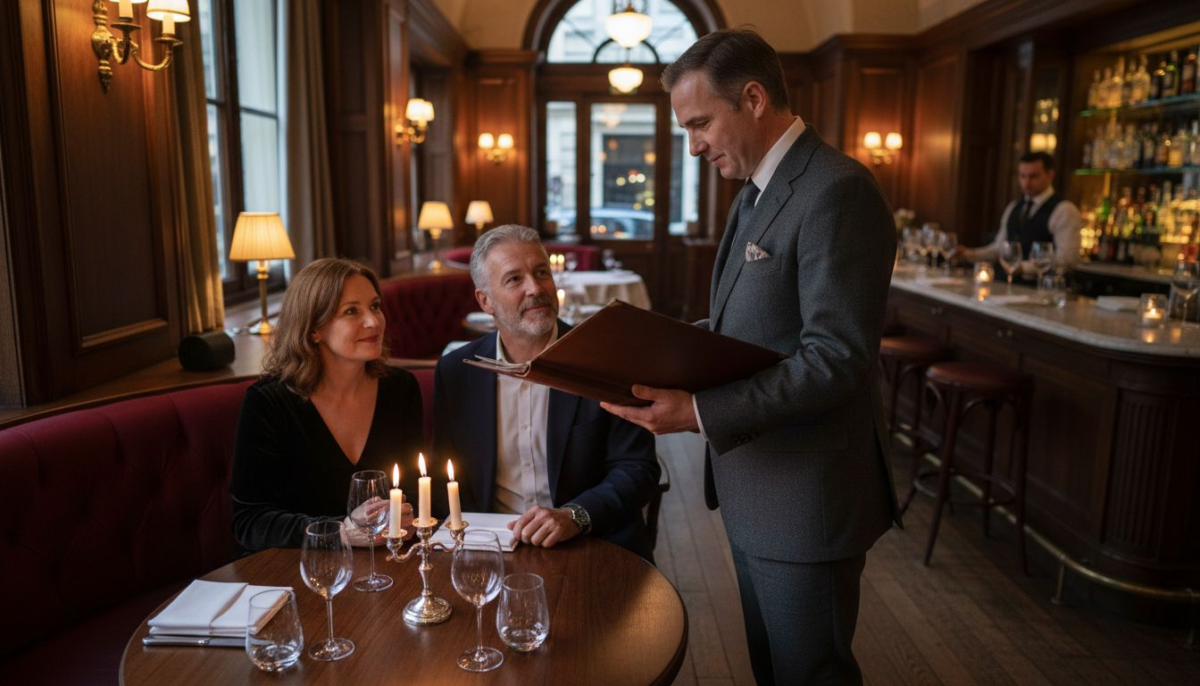
Every detail counts when shaping the impression guests take away from a luxury dining experience in London. Choosing the right menu cover does more than protect pages; it acts as a silent symbol of your venue’s excellence and values. Leather menu covers remain the benchmark for refinement and longevity, thanks to their tactile quality, customisation potential, and reputation for durability—qualities modern guests notice and appreciate from the moment they sit down.
Table of Contents
- Leather Menu Covers Defined And Misconceptions
- Distinct Types And Customisation Options
- Key Characteristics And Functional Benefits
- Branding Advantages And Guest Experience Impact
- Cost Analysis And Comparisons With Alternatives
Key Takeaways
| Point | Details |
|---|---|
| Durability and Cost Efficiency | Leather menu covers last significantly longer than cheaper alternatives, reducing overall replacement and maintenance costs. |
| Brand Perception | Investing in leather reinforces a venue’s luxury image and enhances guest expectations, justifying premium pricing. |
| Tactile Experience | The sensory engagement of quality leather influences guest perceptions of service and value before any food is served. |
| Customisation Benefits | Bespoke options like embossing and colour variations create memorable brand experiences that resonate with guests. |
Leather Menu Covers Defined and Misconceptions
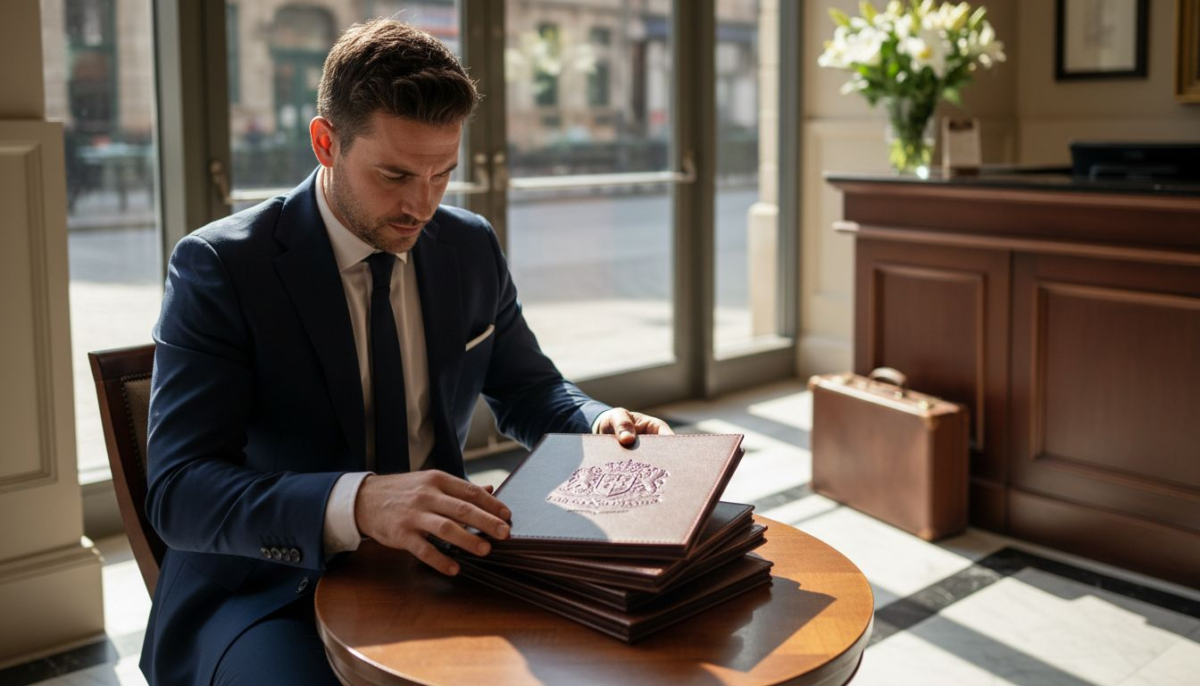
Leather menu covers are protective casings crafted from genuine or high-quality synthetic leather, designed to encase menus whilst adding a touch of refinement to the dining experience. These aren’t merely decorative items—they serve a practical purpose in luxury hospitality settings.
At their core, leather menu covers perform several essential functions:
- Protect menus from spills, stains, and wear during daily use
- Convey brand identity and establish a standard of excellence
- Create a tactile experience that guests remember
- Withstand repeated handling without degrading
Many managers harbour misconceptions about these products. The most common ones include beliefs that leather covers are outdated, purely decorative, or prohibitively expensive to maintain. Yet leather’s natural durability means high-quality covers actually improve with age, making them sound long-term investments rather than liabilities.
Another myth suggests leather is high-maintenance. In reality, genuine leather requires only occasional conditioning and basic care to maintain its appearance and functionality over years of service.
The distinction between genuine and synthetic leather matters significantly. Genuine versus synthetic leather covers differ substantially in longevity, tactile quality, and brand perception. Luxury venues typically opt for genuine leather because it signals authenticity and craftsmanship to discerning guests.
Leather menu covers have roots in European fine dining traditions. They’ve remained the benchmark for quality in hospitality because they deliver both aesthetic appeal and practical value simultaneously.
Why do luxury hotels and Michelin-starred restaurants across London continue investing in leather covers? Because guests associate leather with exclusivity, care, and attention to detail. The sensory experience of opening a leather-bound menu creates an impression before the first course arrives.
Pro tip: When selecting covers, prioritise those offering bespoke customisation options—embossed logos or monograms transform standard covers into branded extensions of your venue’s identity.
Distinct Types and Customisation Options
Leather menu covers come in various styles, each suited to different venue aesthetics and brand narratives. Understanding your options helps align cover design with your establishment’s identity.
Material choices define the overall impression:
- Genuine leather for classic luxury and timeless appeal
- Bonded leather for durability at lower investment
- Vegetable-tanned leather for sustainable, eco-conscious venues
- Synthetic leather for budget-conscious luxury alternatives
Your choice depends on your venue’s positioning, guest expectations, and long-term maintenance capacity. Genuine leather signals authenticity, whilst quality synthetic alternatives offer practical benefits without compromising aesthetics.
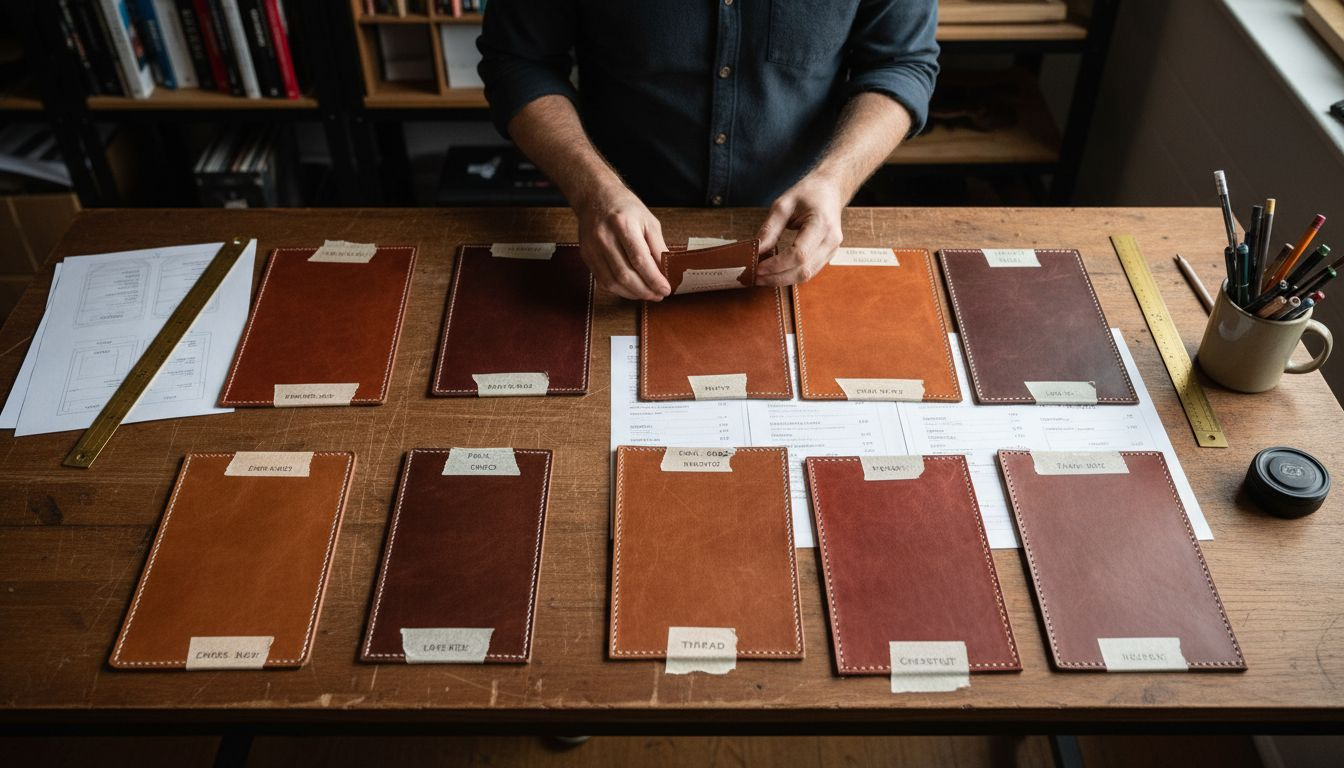
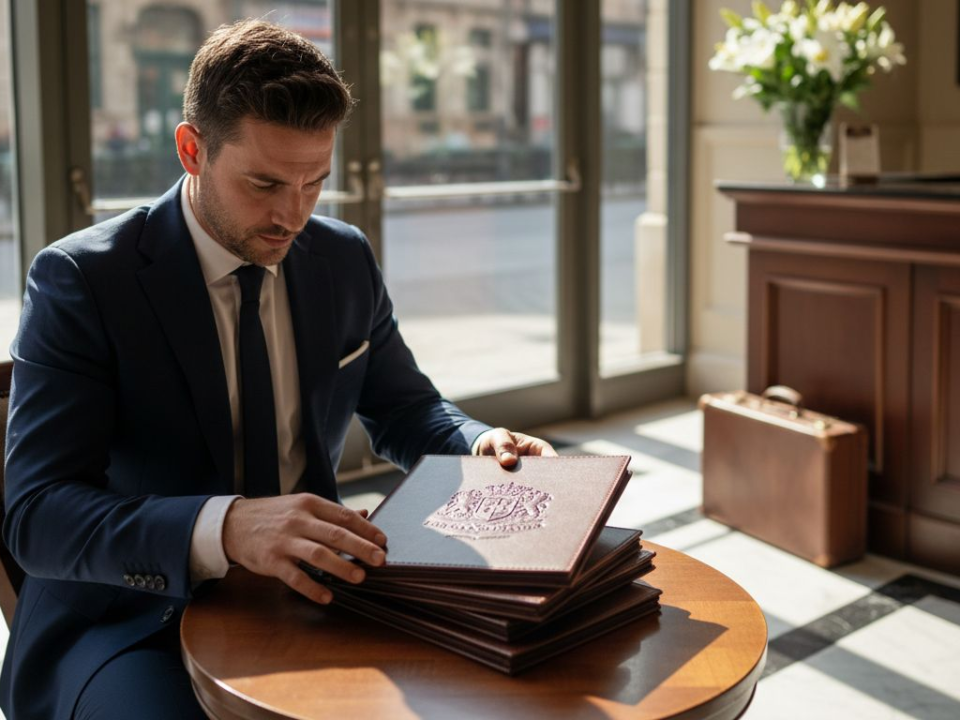
Customisation transforms covers into brand ambassadors. Embossing, foil stamping, and stitching allow you to incorporate your logo, venue name, or decorative patterns directly onto leather surfaces. These details create a cohesive visual experience that guests notice and remember.
Beyond embossing, consider colour customisation. Leather comes in deep burgundies, classic blacks, rich browns, and contemporary neutrals. Your choice should reflect your dining environment—a Mayfair fine-dining establishment might favour charcoal or deep wine, whilst a Soho contemporary restaurant might opt for soft grey or natural tan.
Stitching options add another layer of personalisation. Contrasting thread colours, edge binding, and seam patterns create visual distinction. Some venues use bespoke stitching to echo their interior design palette or architectural details.
Size and format matter too. Standard A4 covers suit traditional menus, whilst landscape formats work for wine lists or à la carte selections. Some luxury venues commission tiered covers that hold multiple menu sections, demonstrating attention to the complete dining experience.
To help you quickly assess customisation options, here’s a summary table:
| Customisation Method | Visual Impact | Typical Venue Use |
|---|---|---|
| Embossing | Subtle, tactile luxury | Fine-dining, Boutique hotels |
| Foil Stamping | Shiny, eye-catching | Trendy bars, Modern venues |
| Contrasting Stitching | Decorative, unique | Contemporary restaurants |
| Colour Variation | Custom palette match | Brand-aligned interiors |
| Monogramming | Exclusive, personal | Private clubs, Premium venues |
Customisation isn’t simply aesthetic—it’s a strategic tool for reinforcing brand identity and creating memorable moments that justify premium pricing.
The best customisation approach aligns with your venue’s operational reality. High-traffic establishments benefit from durable embossing that withstands repeated handling, whilst intimate fine-dining venues might favour subtle monograms that speak to exclusivity rather than prominence.
Pro tip: Request sample covers with your proposed customisation before committing to full production—colours, embossing depth, and stitching appear different in person than on digital mockups, ensuring your final product matches your vision perfectly.
Key Characteristics and Functional Benefits
Leather menu covers deliver practical advantages that extend far beyond their aesthetic appeal. Understanding these benefits helps justify the investment to stakeholders and explains why luxury venues prioritise them.
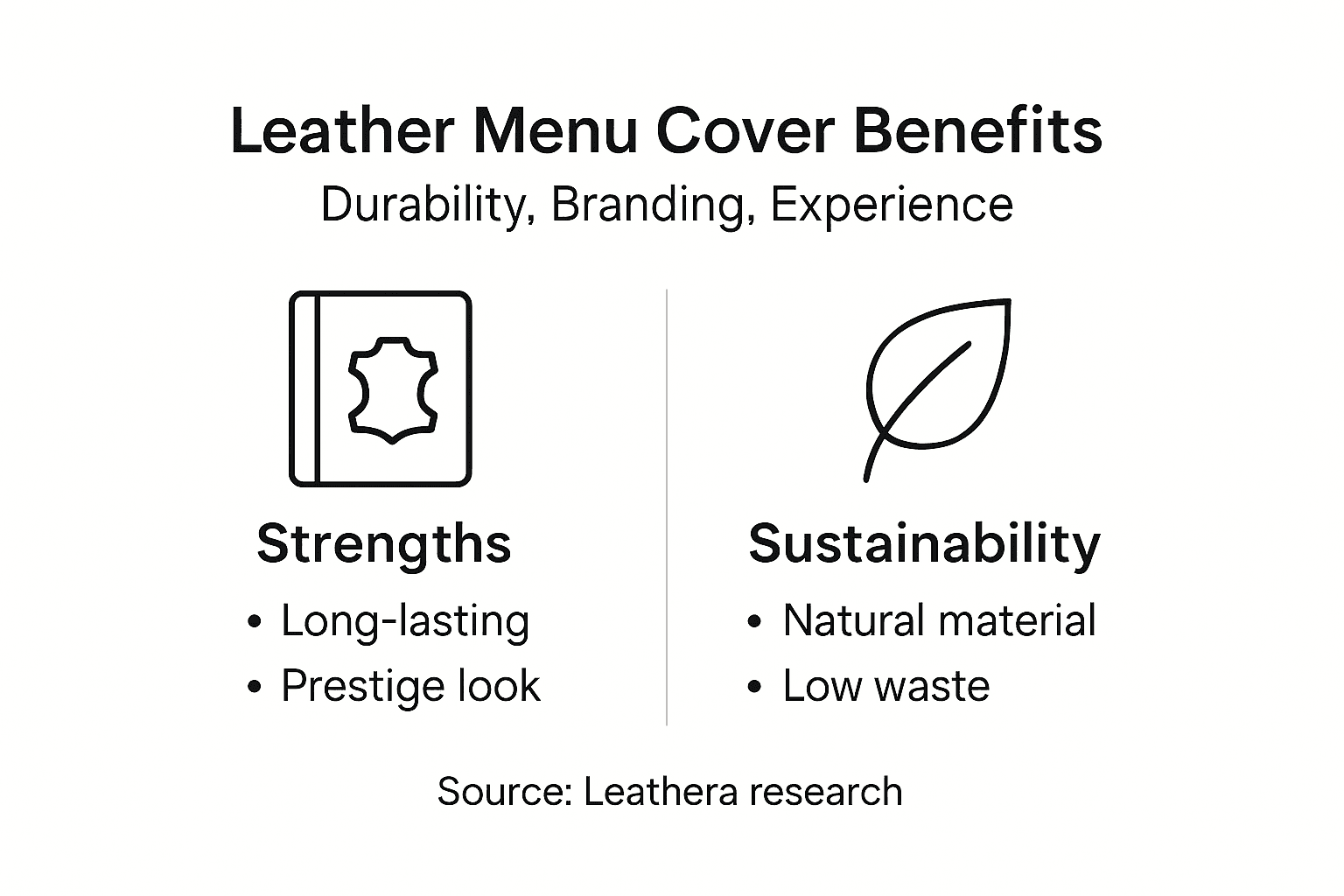
Durability stands as the primary functional advantage. Quality leather withstands 30–40% more handling cycles than fabric alternatives, meaning fewer replacements and lower long-term costs. A well-maintained leather cover can serve your venue for five years or longer, whilst cheaper alternatives deteriorate within months.
Leather’s protective qualities matter operationally:
- Shields menus from wine spills, grease marks, and accidental damage
- Maintains pristine menu presentation throughout service
- Extends menu lifespan by protecting pages from wear
- Reduces reprinting costs when menus stay cleaner longer
- Prevents staining that compromises your venue’s professionalism
The tactile experience creates an often-overlooked benefit. When guests open a leather menu cover, they feel substance and quality. This sensory interaction communicates that your establishment invests in details. The weight and texture signal premium service before a single word is read.
Leather develops character over time rather than deteriorating. High-quality leather naturally develops patina, adding visual richness that improves with age. This storytelling quality reinforces your venue’s established credentials and heritage.
Brand reinforcement happens subtly through every guest interaction. Custom embossing means your logo appears consistently across all covers, creating visual harmony with your interior design, stationery, and branding elsewhere.
A leather menu cover isn’t just protection—it’s a silent ambassador for your establishment’s standards and values.
Operational benefits compound over time. Staff appreciate covers that resist damage, reducing frustration with replacements. Managers appreciate lower replacement cycles and reduced waste. Guests appreciate the refined experience that justifies premium pricing.
Leather also supports sustainability messaging. Genuine leather is a natural byproduct of the food industry, making it more environmentally responsible than plastic or synthetic alternatives requiring petrochemicals and complex manufacturing processes.
Pro tip: Track your menu replacement frequency before investing in leather covers, then calculate annual savings based on reduced replacements—this data proves ROI to finance teams and stakeholders.
Branding Advantages and Guest Experience Impact
Leather menu covers function as silent brand ambassadors, extending your venue’s identity through every guest interaction. This is where strategic thinking separates thriving establishments from merely adequate ones.
When guests open a leather menu cover, they form immediate impressions about your venue’s standards. Cohesive branding across menus, uniforms, and interiors drives measurable loyalty increases. Venues that invest in coordinated design see higher return visit rates, meaning your menu cover choice directly impacts revenue.
The menu cover shapes guest expectations before food arrives:
- Communicates professionalism and attention to detail
- Establishes perceived value of the dining experience
- Creates emotional connection through sensory engagement
- Reinforces your venue’s narrative and brand promises
- Influences willingness to pay premium prices
Customisation transforms covers into brand storytelling tools. Embossed logos and monograms communicate exclusivity without speaking. A Michelin-starred restaurant’s leather cover with subtle embossing tells a different story than a casual venue’s generic alternative.
Sensory experience matters profoundly. Guests who feel quality leather texture and weight subconsciously associate those physical sensations with premium pricing and craftsmanship. This tactile engagement creates stronger memory formation than visual elements alone.
Brand consistency builds trust across touchpoints. Your leather menu covers should visually echo your website colour palette, interior design scheme, and stationery choices. This unified approach reinforces brand recognition and makes your venue feel intentional rather than haphazard.
The menu cover is often the first branded item a guest physically touches—it sets the tone for their entire dining experience.
London’s luxury hospitality market particularly values this consistency. Guests dining at Mayfair establishments expect cohesive design language. Inconsistent branding signals carelessness and undermines premium positioning, regardless of food quality.
Guest perception directly influences pricing power and repeat business. Venues with strong brand identity through thoughtful details like leather menu covers command higher prices and generate stronger word-of-mouth recommendations. Your cover investment pays dividends through multiple revenue channels.
Pro tip: Photograph your leather menu covers in ambient dining light and feature them prominently on your Instagram and website—visual consistency across marketing channels reinforces brand perception and attracts guests aligned with your positioning.
Cost Analysis and Comparisons with Alternatives
Leather menu covers require higher upfront investment than cheaper alternatives. However, viewing this purely as a cost rather than a long-term financial strategy misses the real picture.
Understanding the true cost means looking beyond initial purchase price. Fabric covers cost less initially but deteriorate quickly, requiring replacement every 12–18 months depending on venue traffic. Plastic alternatives are similarly inexpensive but become sticky, discoloured, and visually degrading within months, damaging your brand perception.
Here’s how the comparison breaks down:
Here’s a concise comparison of menu cover materials and their business impact:
| Material | Longevity | Branding Effect | Maintenance Difficulty |
|---|---|---|---|
| Genuine Leather | 5+ years, gains patina | Signals authenticity & luxury | Occasional conditioning required |
| Bonded Leather | 3–4 years, minor ageing | Durable, good value | Easy to clean, less refinement |
| Synthetic Leather | 2–3 years, stable look | Budget-friendly, less prestige | Minimal care, easy upkeep |
| Fabric | 1–1.5 years, deteriorates fast | Casual impression, less premium | Needs frequent replacement |
| Plastic | 6–12 months, discolours | Undermines luxury identity | Simple to clean, poor durability |
| Wood | 2–4 years, solid feel | Rustic/organic, niche appeal | Occasional polishing, limited branding |
- Fabric covers: Low upfront cost, frequent replacement, visible wear quickly, poor brand projection
- Plastic alternatives: Minimal initial investment, rapid deterioration, difficulty cleaning, undermines luxury positioning
- Wood covers: Mid-range pricing, suits rustic venues, limited customisation, specific aesthetic constraints
- Leather covers: Higher initial cost, superior durability, improves with age, strengthens brand identity
Leather’s extended lifespan reduces replacement frequency significantly, lowering long-term costs. A quality leather cover serving your venue for five years costs substantially less per month than fabric covers replaced twice yearly.
Calculate your true cost of ownership by tracking replacement cycles over five years. Most managers discover that leather’s upfront cost premium disappears when maintenance and replacement expenses compound for cheaper alternatives.
Waste reduction matters operationally and environmentally. Constantly replacing deteriorating covers generates disposal costs and sourcing logistics. Leather covers eliminate this friction, with minimal waste over their lifespan.
Brand perception costs matter too. Shabby menu covers actively damage guest perception and justify lower pricing. Quality leather covers support premium positioning, meaning you recover the investment through increased revenue per cover—guests perceive greater value and willingness to spend rises.
The cheapest cover isn’t the least expensive; it’s the one that costs least over time while supporting your revenue strategy.
Leather balances cost with premium durability and brand prestige, making it ideal for venues prioritising longevity and guest perception. London’s luxury establishments recognise this truth—sustainable investments in quality materials outperform constant budget replacements.
Pro tip: Request a five-year cost comparison from your supplier, calculating total ownership including replacements for fabric alternatives—this financial document convinces finance teams and stakeholders that leather represents better value despite higher initial outlay.
Elevate Your Luxury Venue with Bespoke Leather Menu Covers
The challenge for premium venues is balancing durability, brand identity and guest experience without compromising on elegance or sustainability. As highlighted in the article, many establishments struggle with menus that deteriorate quickly or fail to convey the exclusivity their guests expect. Key pain points include protecting menus from wear and stains, communicating craftsmanship through customisation such as embossing, and achieving a tactile premium impression that guests remember long after dining.
At Leathera, we understand these exact needs because we specialise in bespoke leather menu covers that perfectly align with your venue’s identity and operational demands. Crafted with sustainable, high-quality genuine leather, our covers develop a distinguished patina over time, enhancing rather than fading your brand image. Our customisation options — from foil stamping and monogramming to personalised colour and stitching — transform menu covers into silent ambassadors of your venue’s dedication to luxury and care.
Experience first-hand how premium craftsmanship supports your long-term savings and guest satisfaction by investing in leather covers designed specifically for the hospitality sector. Discover the difference that a truly bespoke solution makes.
Explore our handcrafted collection and learn more about how to reinforce your brand with custom leather accessories.
Don’t settle for ordinary when your venue can exemplify excellence. Visit Leathera today to request your sample and begin elevating your guest experience with elegant, durable leather menu covers tailored to your unique style and standards.
Frequently Asked Questions
What are leather menu covers and why are they important for luxury venues?
Leather menu covers are protective casings made from genuine or high-quality synthetic leather, designed to safeguard menus while enhancing the dining experience’s aesthetic appeal. They communicate brand identity and withstand repeated handling, making them essential in luxury hospitality settings.
How do leather menu covers compare to synthetic or fabric alternatives?
Leather menu covers are known for their superior durability, often lasting five years or longer. In contrast, synthetic or fabric alternatives generally have shorter lifespans, require more frequent replacements, and may not convey the same level of luxury and professionalism as leather options.
What customisation options are available for leather menu covers?
Leather menu covers can be customised through methods like embossing, foil stamping, colour variation, and contrasting stitching. These options allow venues to incorporate logos or unique designs that reflect their brand identity, creating a cohesive visual experience for guests.
How does investing in leather menu covers impact brand perception?
Investing in leather menu covers enhances brand perception by signalling quality, authenticity, and attention to detail. Guests often associate leather with exclusivity, which can positively influence their overall dining experience and willingness to pay premium prices.