6 Ways Premium Craftmanship Elevates Hospitality Spaces
February 22, 2026
6 Essential Leather Items for Restaurants: Enhance Your Venue
February 24, 2026
Finding materials that satisfy both luxury and environmental standards often presents a unique challenge for London’s hospitality leaders. Guests expect the highest quality, yet they increasingly pay attention to the origins and impact of every detail they encounter. By choosing sustainable materials in hospitality design, you support responsible sourcing, durability, and genuine value all while reinforcing your venue’s eco-friendly brand identity. This approach not only meets modern expectations but also positions your venue as a thoughtful leader in responsible luxury.
Table of Contents
- Defining Sustainable Materials in Hospitality
- Types of Sustainable Materials and Their Distinctions
- Eco-Friendly Leather: Sourcing and Certification
- Impact on Luxury Venue Experience and Branding
- Regulations, Costs, and Common Pitfalls
Key Takeaways
| Point | Details |
|---|---|
| Sustainable Materials | Selecting sustainable materials balances environmental, social, and economic responsibilities in luxury hospitality. |
| Guest Expectations | Today’s travellers prefer venues that demonstrate commitment to sustainability, influencing their booking decisions. |
| Durability and Cost | Investing in durable materials reduces long-term costs and enhances guest satisfaction through quality experiences. |
| Certification Importance | Utilising certified suppliers ensures accountability and credibility, crucial for brand reputation in the luxury market. |
Defining Sustainable Materials in Hospitality
Sustainable materials in hospitality go beyond being eco-friendly. They represent a commitment to creating spaces that balance luxury with responsibility across environmental, social, and economic dimensions.
For London’s luxury venues, this means selecting materials that deliver on three fronts:
- Environmental responsibility: Reducing carbon footprint, water usage, and waste throughout the product lifecycle
- Social impact: Supporting fair labour practices and ethical sourcing throughout supply chains
- Economic viability: Investing in durable, long-lasting materials that deliver genuine value and reduce replacement costs
What Makes Materials “Sustainable” in Your Venue?
Sustainable materials aren’t simply recycled or biodegradable. The definition encompasses managing operations responsibly through resource-efficient choices that minimise environmental harm. For hospitality managers, this means evaluating materials across their entire lifecycle—from production through disposal.
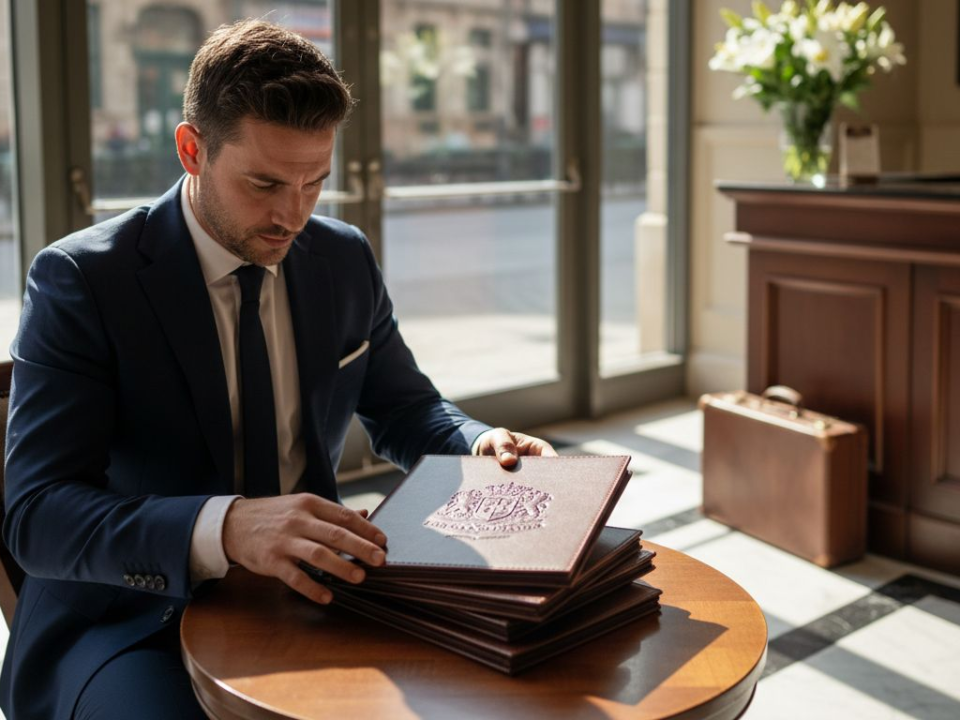
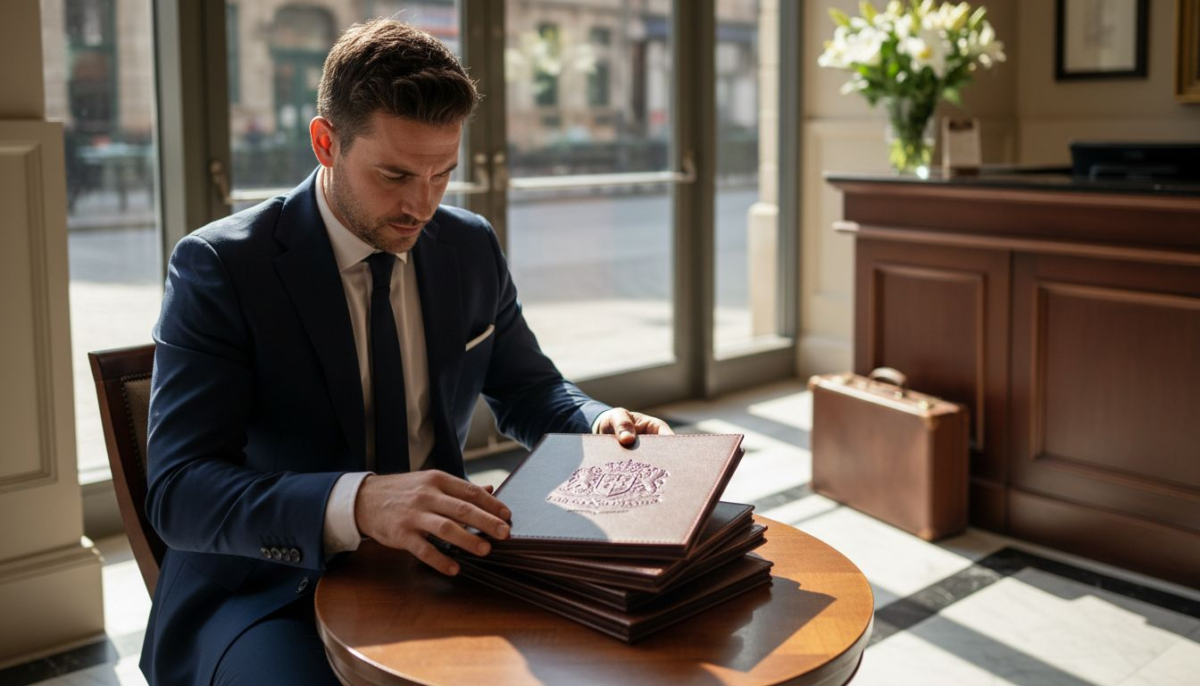
A leather menu cover exemplifies this approach. Quality leather sourced responsibly lasts years, reducing the need for replacements. This durability directly cuts waste and operational costs whilst maintaining the aesthetic standards your guests expect.
Sustainability also involves value creation across economic, social, and environmental dimensions, ensuring your material choices align with broader organisational sustainability goals.
Why This Matters for Your Guests
Today’s luxury travellers care about where their money goes. They notice when a restaurant uses thoughtfully sourced materials. These details shape their perception of your brand and their willingness to return.
Beyond guest experience, sustainable materials help your venue:
- Reduce operating costs through durability and efficiency
- Lower environmental footprint without sacrificing quality
- Strengthen brand reputation amongst conscious consumers
- Meet growing regulatory expectations around sustainability reporting
The Real Difference in Hospitality
Unlike retail or residential settings, hospitality spaces face intense usage. A hotel room guest might occupy your space for one night; a restaurant seat turns over dozens of times weekly. Materials must withstand this pressure whilst remaining sustainable.
Handcrafted leather accessories deliver here. They’re built to endure heavy use, maintain their appearance, and age gracefully—qualities that luxury venues require.
Sustainable materials aren’t a marketing angle; they’re the foundation of responsible luxury that justifies premium pricing to discerning guests.
The shift toward sustainable hospitality isn’t theoretical. It’s driven by operational realities: reduced waste means lower disposal costs, durable materials mean fewer replacements, and guest satisfaction improves when values align.
Pro tip: When evaluating potential materials for your venue, request lifecycle assessments from suppliers—this shows exactly where environmental impact occurs and helps you make informed decisions that align with both guest expectations and your bottom line.
Types of Sustainable Materials and Their Distinctions
Not all sustainable materials perform equally in hospitality settings. Each type offers distinct advantages and drawbacks depending on your venue’s needs, guest expectations, and operational demands.
Understanding these distinctions helps you select materials that genuinely align with both sustainability goals and practical requirements. A leather coaster behaves differently than recycled terrazzo—and knowing why matters.
Three Main Categories of Sustainable Materials
Sustainable hospitality materials fall into three primary groups: bio-based, recycled, and energy-efficient. Each category addresses sustainability from different angles.
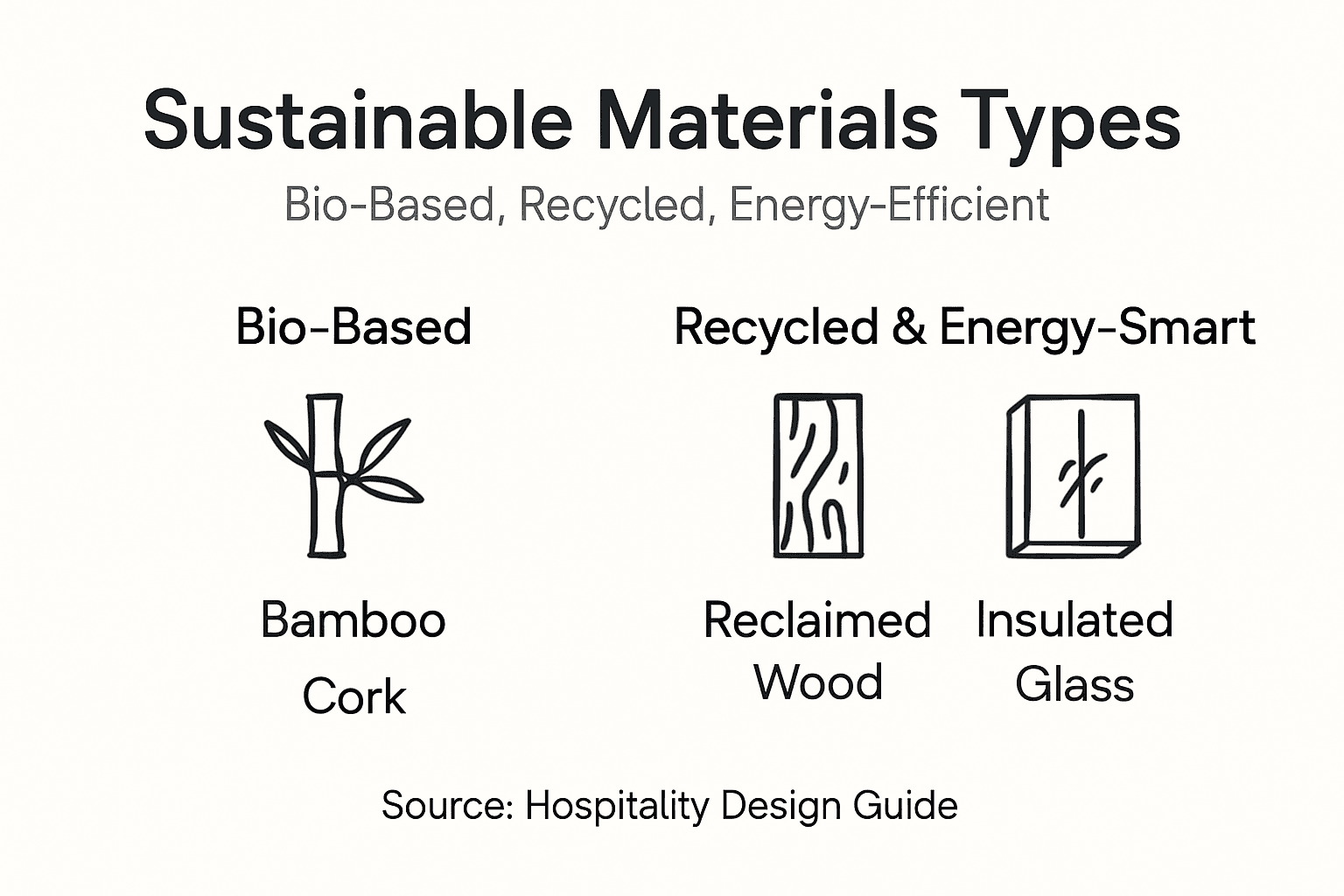
Bio-based materials come from renewable sources. Bamboo, cork, and responsibly sourced leather regenerate naturally, reducing dependence on finite resources.
Recycled materials repurpose existing resources. Reclaimed wood, recycled steel, and upcycled textiles divert waste from landfills whilst maintaining structural integrity.
Energy-efficient materials reduce operational costs over time through superior insulation or durability, lowering your venue’s overall environmental footprint.
The following table highlights distinctions between the three main categories of sustainable materials used in hospitality venues:
| Category | Key Source | Best Hospitality Use | Notable Limitation |
|---|---|---|---|
| Bio-based materials | Bamboo, cork, responsibly sourced leather | Decorative finishes, accessories | Potential for higher initial cost |
| Recycled materials | Reclaimed wood, recycled metals, textiles | Furniture, surface materials | Sometimes reduced visual uniformity |
| Energy-efficient materials | Insulation composites, smart glass | Building envelopes, windows | May involve complex installation |
Material Distinctions That Matter in Practice
When selecting sustainable materials for your London venue, consider these key differences:
- Durability: How long the material withstands daily use before replacement becomes necessary
- Texture and aesthetics: Whether the material delivers the luxury feel your guests expect
- Maintenance requirements: Cleaning protocols and ongoing care demands
- Environmental impact: Production methods, transportation distance, and end-of-life options
- Functional properties: Water resistance, stain resistance, and heat tolerance
Sustainable materials in hospitality design include hand-carved wood, natural clay plaster, recycled terrazzo, and technical textiles. Each suits different applications within your space.
Leather in the Sustainable Materials Spectrum
Leather occupies a unique position amongst sustainable materials. Quality leather is bio-based, durable, and ages beautifully—reducing replacement frequency. A well-maintained leather menu cover or hotel room accessory lasts decades, outperforming synthetic alternatives in both longevity and environmental value.
Unlike single-use materials, leather develops character through use. This aesthetic advantage translates to guest satisfaction and brand differentiation.
The most sustainable material is the one your venue uses longest. Durability matters more than a material’s initial eco-credentials if it requires frequent replacement.
Practical reality differs from theory. Your menu covers face constant handling; your coasters endure wet glasses and temperature changes. Materials must survive this pressure whilst remaining sustainable.

Pro tip: When comparing sustainable materials, request durability data and warranty information from suppliers—this reveals which materials truly perform in hospitality environments versus marketing claims.
Eco-Friendly Leather: Sourcing and Certification
Not all leather is created equal. When sourcing sustainable leather for your London venue, certifications provide concrete proof that suppliers meet rigorous environmental standards rather than relying on marketing claims alone.
Certified eco-friendly leather demonstrates commitment to responsible production practices. This matters to your guests and protects your brand reputation.
Understanding Leather Certifications
International certifications validate leather sustainability across multiple criteria. The most recognised include Leather Working Group audits, OEKO-TEX standards, and Sustainable Leather Foundation protocols, each addressing different aspects of responsible production.
These certifications ensure leather manufacturers control chemical use, manage water efficiently, handle waste responsibly, and maintain transparent supply chains. For hospitality venues, this transparency proves invaluable when communicating sustainability credentials to guests.
The Leather Working Group Standard
The Leather Working Group is the global standard most hospitality procurement teams trust. LWG audits manufacturers on environmental performance metrics including water consumption, energy use, chemical management, and waste handling.
Over one-third of global leather production undergoes LWG certification. This scale means certified suppliers are accessible and their standards are industry-proven.
LWG-certified leather producers receive environmental ratings from bronze to gold, making supplier comparison straightforward for your procurement process.
What to Look for When Sourcing
When evaluating leather suppliers for your menu covers, bill presenters, and hotel room accessories, verify these elements:
- Certification status: Valid LWG certification or equivalent international standards
- Rating level: Gold-rated producers meet highest environmental standards; bronze indicates minimum compliance
- Supply chain transparency: Tannery location and upstream material sourcing documented
- Chemical restrictions: Verification that harmful substances are eliminated or minimised
- Water management: Evidence of water recycling and treatment protocols
Bespoke leather accessories tailored to your venue’s specifications should still meet these certification standards. Quality craftsmanship and environmental responsibility aren’t mutually exclusive.
Why Certification Matters Beyond Compliance
Certified sustainable leather strengthens your venue’s brand positioning. Today’s luxury guests research where products originate. They expect high standards at premium venues, and certifications provide the proof they seek.
Beyond guest perception, certifications reduce your legal and reputational risk. Suppliers with validated environmental practices are less likely to face future regulatory action or supply chain disruption.
Certification isn’t bureaucracy—it’s your supplier’s guarantee that they’ve invested in systems that protect both the environment and your business interests.
The investment in certified leather typically costs marginally more upfront but delivers long-term value through durability, guest confidence, and reduced replacement cycles.
Below is a table summarising the business impacts of certified sustainable leather in luxury hospitality settings:
| Benefit | Operational Outcome | Impact on Guest Experience |
|---|---|---|
| Greater durability | Fewer replacements, lower waste | Perceived quality, lasting luxury |
| Certification transparency | Easier compliance, reduced risk | Enhanced trust in your brand |
| Responsible sourcing | Meets regulatory expectations | Attracts socially conscious guests |
| Distinctive ageing | Improved lifecycle value | Unique, memorable aesthetics |
Pro tip: Request certification documentation and audit reports directly from suppliers before committing to large orders—this ensures certifications are current and provides baseline environmental data you can reference in your sustainability communications.
Impact on Luxury Venue Experience and Branding
Sustainable materials aren’t just environmentally sound—they’re strategic branding assets. When guests experience a luxury hotel or restaurant, every tactile detail reinforces your venue’s identity and values.
A handcrafted leather menu cover or hotel room accessory sends a message: you’ve invested in quality that lasts, sourced responsibly, and designed to impress. This matters more than you might think.
How Sustainability Enhances Guest Perception
Sustainability has become a key differentiator in luxury hospitality branding, attracting guests who associate environmental responsibility with refined taste and social awareness.
Guests at premium London venues increasingly expect sustainability credentials. They research venues beforehand, checking for environmental commitments. Visible sustainable practices reinforce their decision to book with you.
The aesthetic experience matters too. Sustainable materials like quality leather age beautifully, developing patina that tells a story. This authenticity resonates with luxury guests far more than sterile, mass-produced alternatives.
Creating Emotional Connection Through Design
Hospitality branding leverages design and storytelling to connect emotionally with guests, with sustainable materials playing a crucial role in this narrative.
When guests hold a leather bill presenter or place their phone on a sustainable coaster, they’re experiencing your brand values physically. This tactile engagement creates lasting impressions that digital marketing cannot replicate.
Authenticity matters. Guests can distinguish between genuine sustainability efforts and superficial greenwashing. Certified sustainable leather accessories demonstrate real commitment rather than marketing theatre.
Competitive Advantage in the Luxury Market
Sustainable materials differentiate your venue from competitors. In London’s competitive hospitality landscape, this distinction directly influences booking decisions and guest loyalty.
Venues offering sustainable luxury experiences:
- Attract eco-conscious affluent travellers willing to pay premium rates
- Generate positive word-of-mouth and social media mentions
- Build stronger emotional bonds with guests through shared values
- Justify higher pricing through demonstrated quality and responsibility
- Create content opportunities that enhance digital marketing efforts
Your leather accessories become conversation pieces. Guests notice quality, ask about sourcing, and share their experience online. Sustainable choices become your marketing story.
Building Long-Term Brand Value
Guests remember how your venue made them feel. Sustainable luxury materials create the experience of thoughtfulness, quality, and responsibility that builds lasting brand loyalty.
Investment in certified sustainable materials pays dividends beyond immediate guest satisfaction. You’re building a reputation that attracts returning guests and justifies premium positioning in the market.
This positioning compounds over time. One excellent experience drives recommendations, which drive bookings, which drive revenue. Your sustainability credentials become core brand identity.
Pro tip: Document your sustainable material sourcing and display certification information subtly throughout your venue—place cards noting leather suppliers, QR codes linking to certification details, or brief sustainability notes in welcome materials. This transparency builds trust whilst keeping guests informed without overwhelming them.
Regulations, Costs, and Common Pitfalls
Sustainability in hospitality sounds straightforward until you encounter the reality: regulatory requirements vary, costs add up quickly, and greenwashing tempts even well-intentioned venues. Understanding these challenges helps you navigate the transition effectively.
London’s luxury venues face increasing environmental scrutiny from guests, regulators, and stakeholders. Getting it right requires clear-eyed planning.
Navigating Regulatory Requirements
UK hospitality venues increasingly face environmental certification requirements such as LEED, Green Key, and EarthCheck alongside voluntary industry standards. Compliance varies by region and venue type, adding complexity to procurement decisions.
Whilst certification benefits your branding and guest appeal, they also demand documented compliance and regular audits. Many venues underestimate the administrative burden alongside material costs.
Start by identifying which certifications genuinely matter for your venue. Not all certifications suit every operation. A boutique London restaurant has different requirements than a large hotel chain.
The Real Cost Picture
Sustainable materials typically cost 10-25% more upfront than conventional alternatives. For leather accessories, this means certified sustainable options command a premium—but durability often justifies the investment.
Compliance with environmental regulations can increase initial costs, yet operational efficiencies and reputational benefits offset these expenses over time. Quality leather that lasts years reduces replacement costs significantly.
Budget considerations include:
- Premium pricing for certified sustainable materials
- Certification audits and documentation costs
- Staff training on sustainability practices
- Initial implementation alongside operational changes
- Ongoing compliance monitoring and reporting
The key distinction: upfront costs versus lifetime value. Cheap replacements accumulate expenses faster than durable sustainable alternatives.
Common Pitfalls to Avoid
Greenwashing represents the most dangerous pitfall. Claiming sustainability without certification or genuine commitment damages credibility when guests discover inconsistencies.
Other common mistakes include:
- Inconsistent implementation: Sustainable leather accessories alongside single-use plastics sends mixed messages
- Insufficient supplier vetting: Assuming certification without verification
- Poor communication: Failing to inform guests about sustainability efforts
- Inadequate record-keeping: Unable to prove compliance when questioned
- Overlooking lifecycle costs: Focusing on purchase price rather than durability
Many venues commit partially, implementing sustainability selectively across departments. This fragmented approach wastes investment without delivering meaningful impact or guest perception benefits.
Building Sustainable Operations
Sustainability works when integrated systematically—not when scattered across isolated purchases. Coherence matters as much as good intentions.
Start with a clear sustainability strategy aligned with your venue’s brand positioning. Identify which material choices matter most to your guests and operations. Prioritise certified suppliers and transparent sourcing.
Document everything. Certifications only prove value when you can explain and defend your choices confidently to guests and stakeholders.
Pro tip: Calculate total cost of ownership—not just purchase price—when comparing sustainable materials to conventional alternatives. Include replacement frequency, maintenance requirements, and durability data. This realistic assessment often reveals that certified sustainable leather costs significantly less over five or ten years than cheaper alternatives requiring frequent replacement.
Elevate Your Luxury Venue with Certified Sustainable Leather Accessories
Addressing the challenge of finding truly durable and eco-friendly materials for luxury hospitality venues requires solutions that combine craftsmanship with responsible sourcing. The article emphasises pain points such as frequent replacement costs, greenwashing risks, and guest demands for authentic sustainability. At Leathera, we understand that the most sustainable material is one that endures daily use while telling a story of quality and ethical care—matching your venue’s commitment to environmental responsibility and exceptional guest experiences.
Discover how our bespoke, handcrafted leather menu covers, coasters, and hotel accessories align perfectly with the principles outlined in “Sustainable Materials in Hospitality – Enhancing Luxury Responsibly”. Our products not only meet rigorous eco-certifications but also offer a timeless aesthetic that ages beautifully, reinforcing your brand’s authentic sustainability credentials. Make a confident choice today by exploring Leathera’s bespoke leather solutions and see why top London venues trust us to elevate their interiors. Incorporate true durability and transparency into your venue with certified leather accessories designed for lasting value and effortless luxury.
Frequently Asked Questions
What are sustainable materials in hospitality?
Sustainable materials in hospitality are those that minimise environmental impact while supporting social and economic factors. This includes responsibly sourced resources that reduce carbon footprints, support fair labour practices, and offer durability.
How do I choose sustainable materials for my venue?
Selecting sustainable materials requires assessing their entire lifecycle, from production to disposal. Focus on durability, maintenance requirements, and environmental impact, ensuring that they align with your venue’s sustainability goals.
Why are certifications important for sustainable materials?
Certifications validate that materials meet specific environmental standards, ensuring transparency in production practices. They help assure guests of the brand’s commitment to sustainability and can enhance trust and loyalty.
What are the main categories of sustainable materials?
The three main categories are bio-based materials (like bamboo and cork), recycled materials (such as reclaimed wood and upcycled textiles), and energy-efficient materials that improve insulation and reduce operational costs.