6 Essential Leather Items for Restaurants: Enhance Your Venue
February 24, 2026
How to Select Luxury Leather Accessories for Venues
February 27, 2026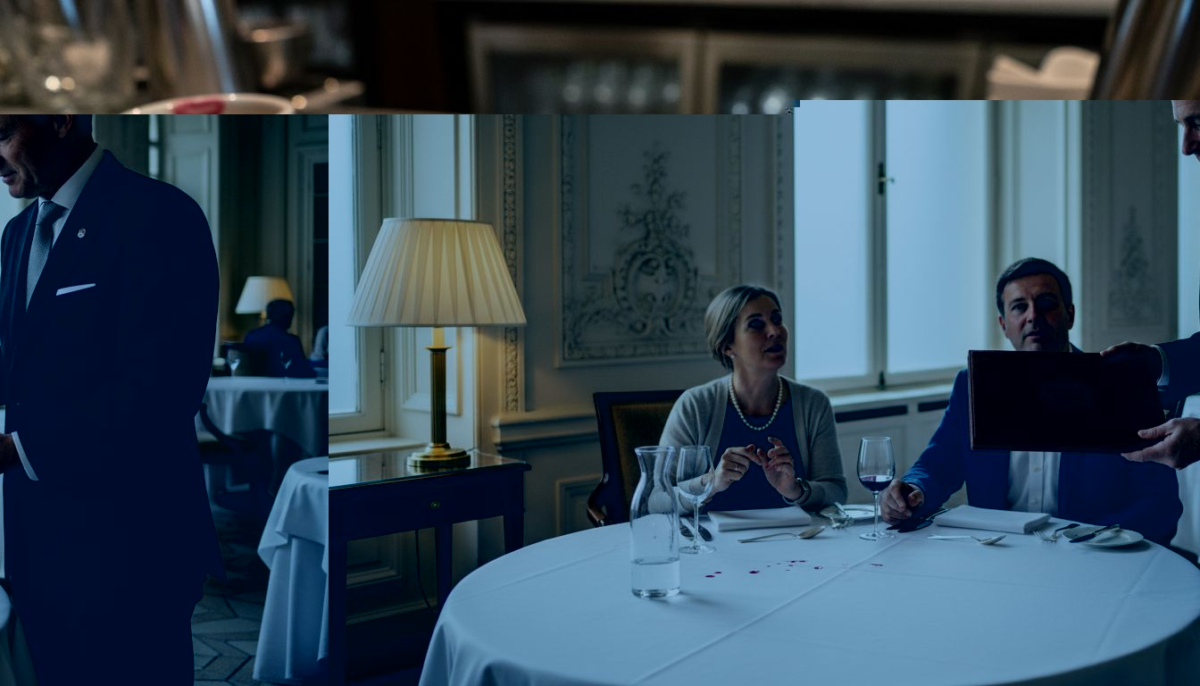
Selecting the right menu covers can transform a dining space and set the tone for every guest interaction. For luxury hotel general managers in London, every small detail signals refinement and shapes perception. Assessing your venue’s unique needs and choosing bespoke leather menu covers lets you create a cohesive aesthetic that reflects your brand’s character and caters to the expectations of discerning travellers. By focusing on materials and design that align with your vision, you ensure every menu touchpoint communicates genuine luxury.
Table of Contents
- Step 1: Assess Venue Needs And Design Preferences
- Step 2: Select Premium Materials And Custom Options
- Step 3: Collaborate On Bespoke Menu Cover Details
- Step 4: Review And Approve Final Samples
- Step 5: Verify Completed Menu Covers For Consistency
Quick Summary
| Key Point | Explanation |
|---|---|
| 1. Understand venue needs and design | Assess the operational context and guest expectations to define your venue’s identity. |
| 2. Choose premium materials wisely | Opt for high-quality materials like leather to enhance durability and guest perception. |
| 3. Collaborate on bespoke details | Work closely with your designer to ensure your menu covers reflect your venue’s identity. |
| 4. Review final samples thoroughly | Conduct structured evaluations of samples under real dining conditions before approval. |
| 5. Verify consistency in completed order | Perform systematic inspections to catch discrepancies and ensure uniform quality across all covers. |
Step 1: Assess venue needs and design preferences
Before you order anything, you need to understand what your venue actually requires. This means examining your specific operational context, guest expectations, and the experience you want to create at the table.
Start by defining your venue’s character and what it communicates to guests. Are you running a contemporary fine dining establishment or a classic luxury hotel restaurant? Your menu covers should reflect this identity immediately. The materials, styles, and branding you choose must work together to create a cohesive aesthetic that guests recognise and remember.
Consider these practical operational factors:
- Menu update frequency and how often pages change
- Daily guest volume and table turnover rates
- Environmental conditions in your dining spaces
- Current interior design scheme and colour palette
- Brand personality you want to reinforce
Your London location carries weight here. Luxury hotel guests expect a certain sophistication, and they notice details others miss. If you’re updating menus weekly, you’ll need covers that withstand frequent handling and component changes. If your turnover is 120 covers per service, durability becomes non-negotiable.
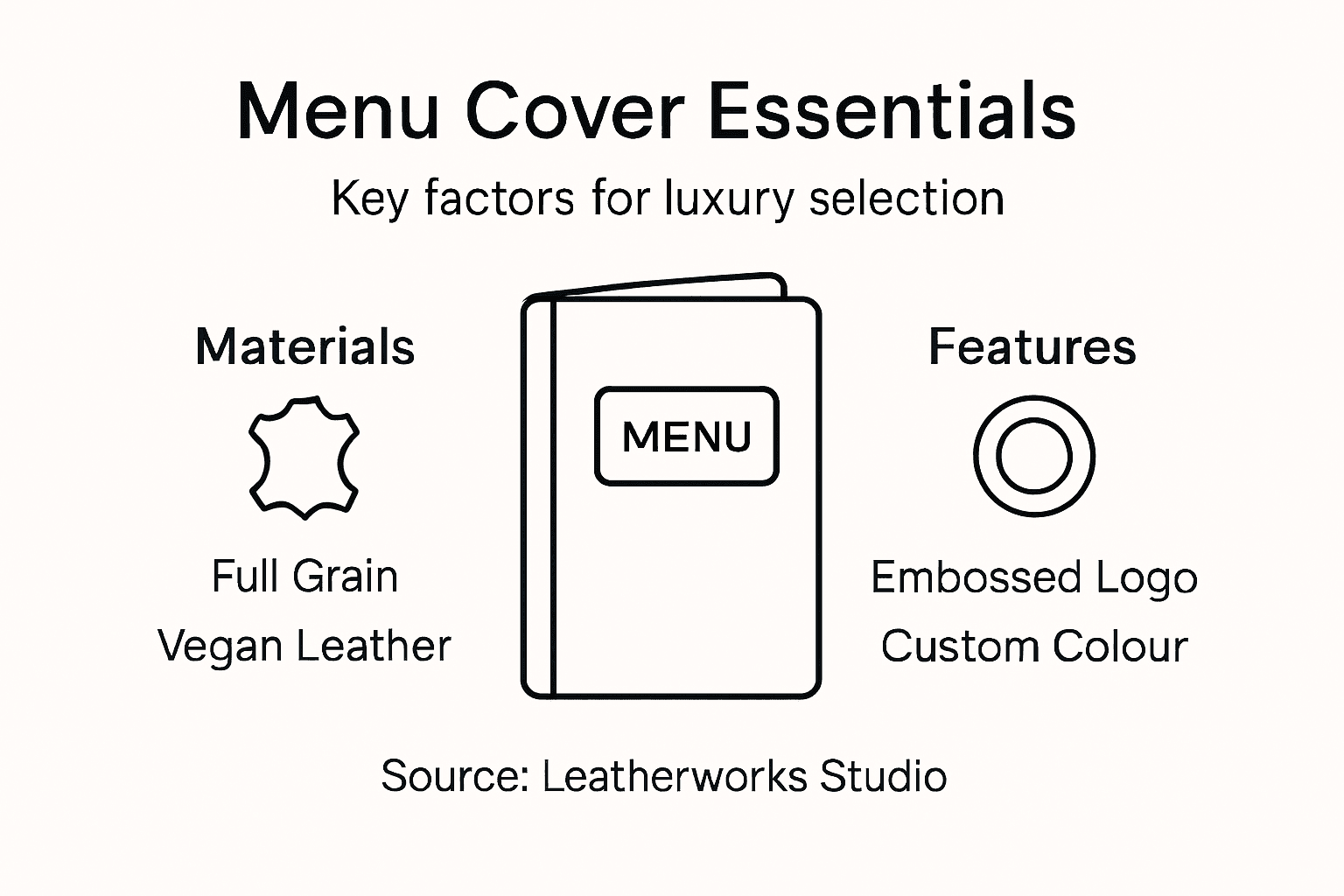
Think about the tactile experience. When guests pick up your menu, what do they feel? How design influences the guest experience matters more than most managers realise. The weight, texture, and finish communicate luxury before a single word is read.
Also assess any brand guidelines you must follow. Do you have specific colours, logos, or design elements that need incorporating? Does your hotel group have visual standards across properties? Getting these constraints clear now saves frustration later.
Match your menu cover specifications to how your venue actually operates, not how you wish it would operate.
Pro tip: Document your venue’s peak service times and average guest duration at table, then discuss these figures with your designer—they’ll ensure your menu covers handle real-world conditions, not theoretical ones.
Step 2: Select premium materials and custom options
This is where your menu covers transform from functional items into signature elements of your venue’s identity. Choosing the right materials and customisation options determines how your covers perform and look over months of service.
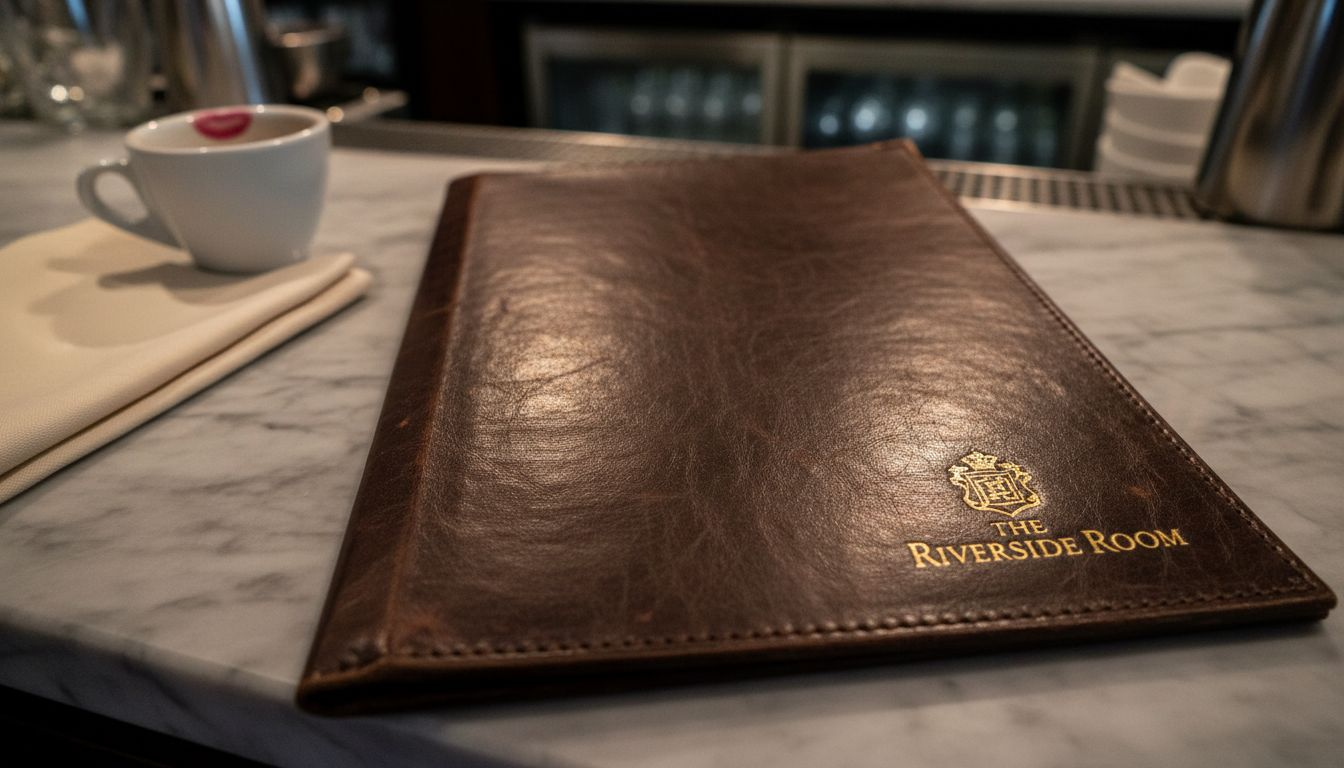
Leather remains the gold standard for luxury hospitality. It ages beautifully, develops character with use, and signals quality immediately to guests. When selecting leather, you’re evaluating several factors simultaneously: grain type, thickness, colour, and finish. Full-grain leather shows natural variations and patina over time, whilst top-grain leather offers consistent appearance with added protection. Your choice depends on whether you want covers that look increasingly refined with age or maintain uniform elegance throughout their life.
Consider these material specifications:
- Leather grade and weight (measured in millimetres)
- Surface finish (matte, satin, or polished)
- Edge treatment and binding style
- Interior lining materials for durability
- Embossing or debossing for branding
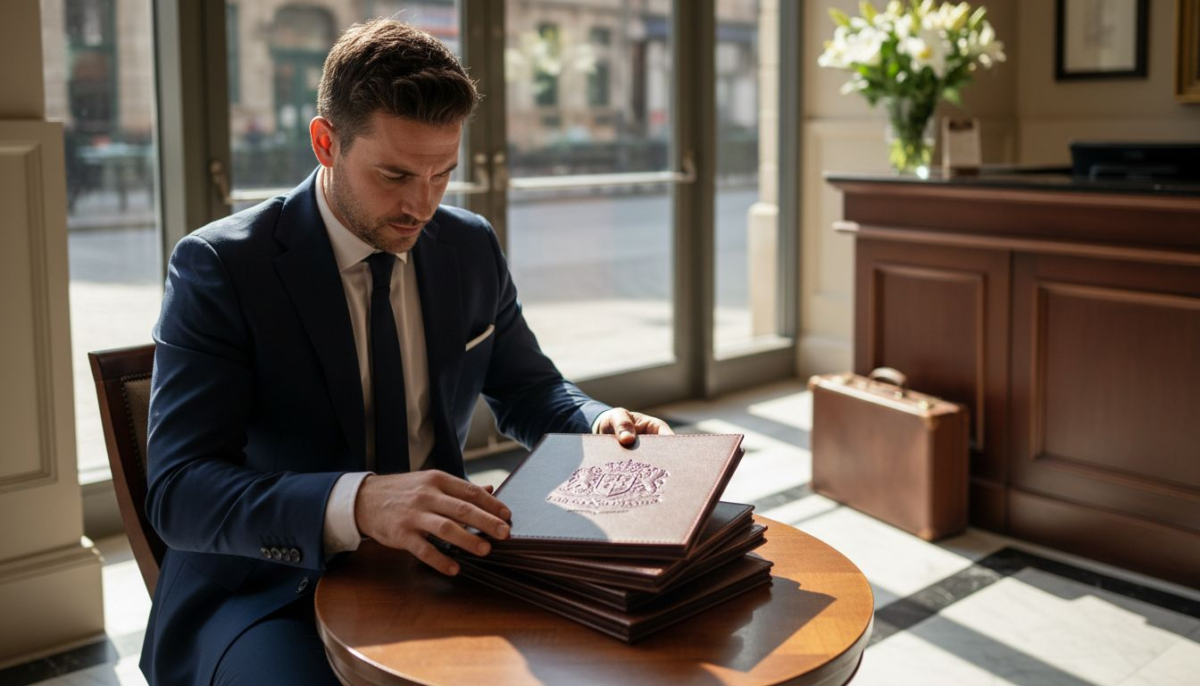
Customisation transforms standard covers into branded assets. Leather customisation options allow you to incorporate your hotel’s logo, coat of arms, or initials directly into the material. You might choose embossed logos that guests run their fingers across or subtle blind tooling that reveals itself under candlelight.
Here’s a quick comparison of menu cover material choices for luxury hospitality venues:
| Material Type | Visual Appeal | Durability | Branding Potential |
|---|---|---|---|
| Full-grain leather | Rich patina; natural textures | Ages well and robust | Detailed embossing possible |
| Top-grain leather | Consistent colour and finish | Offers added protection | Subtle logos and uniformity |
| Synthetic options | Uniform look; cost-effective | Less durable, may crack | Limited tactile impression |
Think beyond aesthetics. Your customisation choices affect durability. Edge binding protects against fraying and extends cover lifespan significantly. Interior quality determines how well pages stay in place during service. Reinforced corners handle the wear patterns real guests create.
Colour selection requires careful consideration within your dining environment. Lighter leathers show marks but convey openness. Darker options hide wear but may feel heavy in intimate spaces. Neutral tones offer versatility if your design scheme evolves.
Premium materials cost more upfront, but they demonstrate respect for your guests and reduce replacement cycles over time.
Pro tip: Request samples of your chosen leather in actual dining light conditions before finalising your order; restaurant lighting transforms how colours appear and can reveal unexpected variations you’ll want to address.
Step 3: Collaborate on bespoke menu cover details
This step separates generic menu covers from truly bespoke pieces that reflect your venue’s identity. Collaboration with your designer transforms your vision into tangible specifications that craftspeople can execute flawlessly.
Start by assembling a clear creative brief. Include your venue’s visual identity, colour schemes, and any specific design elements guests should recognise immediately. Share your hotel’s photography, design documents, or inspiration boards so your designer understands the aesthetic you’re protecting. The more context you provide, the fewer revision cycles you’ll need.
Discuss these specific details with your designer:
- Logo placement and sizing (front cover, spine, interior)
- Font choices for any embossed text or names
- Interior pocket configurations for payment cards or service notes
- Spine width based on your menu thickness
- Page attachment methods that suit your update frequency
- Any sustainability or sourcing preferences you maintain
Specifications matter enormously. If your logo needs embossing, clarify whether you want deep tooling or subtle detail work. The difference is significant in how guests experience your branding. Discuss interior finishing too. Do you need reinforced corners? Specialized stitching? Magnetic closures versus traditional methods?
When collaborating on bespoke hospitality accessories, establish clear timelines and revision processes upfront. How many design iterations does your budget include? When do you need final samples? What’s your production timeline before full delivery?
Request physical samples at each stage. Seeing actual leather swatches, embossing trials, and binding options reveals details that discussions miss entirely. Samples also help you communicate with your team, showing housekeeping, front-of-house staff, and management what guests will experience.
Address practical operational details with your designer. How should staff open and close covers to minimise wear? Should you request additional spare covers for peak periods? What’s your maintenance and care plan once covers arrive?
Clear specifications and samples prevent costly misunderstandings when your order moves into production.
Pro tip: Create a shared project folder with your designer containing all visual references, approved colour samples, and signed-off specifications—this single source of truth eliminates confusion and accelerates revisions.
Step 4: Review and approve final samples
Final samples are your opportunity to inspect quality before full production begins. This stage requires careful attention to detail because what you approve now will be replicated across your entire order.
When samples arrive, resist the urge to approve immediately. Instead, conduct a structured evaluation in the environments where guests will actually use these covers. Place samples in your dining rooms during service hours. Observe how lighting affects the leather colour and finish. Watch how staff members naturally interact with the covers, opening and closing them during table service.
Evaluate these critical aspects:
- Leather colour matches your approved samples under actual dining light
- Embossing or debossing depth and clarity of your logo or initials
- Stitching quality and consistency throughout the covers
- Interior finish and page attachment durability
- Edge binding strength and appearance
- Overall weight and feel during normal handling
Test the practical elements that affect daily operations. How smoothly do pages turn? Do interior pockets hold payment cards securely? Can staff open and close covers without strain? These functional details matter more than aesthetics in hospitality environments.
Invite feedback from your front-of-house team and housekeeping staff. They’ll notice wear patterns and usability issues that managers might overlook. Their insights reveal whether your covers will actually perform during real service.
Compare samples against your original approved specifications and colour references. Even minor deviations matter when your covers are signature elements of the venue. If anything falls short, communicate specific feedback to your supplier immediately rather than hoping production will improve the issues.
Document your approval with photographs showing the samples in your actual dining spaces. This creates a visual record and helps your supplier understand exactly what you’ve accepted. When investing in leather menu covers for luxury venues, ensuring samples meet expectations prevents expensive corrections later in production.
Summarising approval steps, here’s a structured review checklist for evaluating menu cover samples:
| Evaluation Area | Key Questions | Impact on Guest Experience |
|---|---|---|
| Leather colour & finish | Matches dining ambience | Enhances venue’s sophistication |
| Branding detail | Logo clarity and depth | Reinforces identity, evokes luxury |
| Functionality | Easy handling & turning | Ensures smooth service, reduces wear |
| Stitching & binding | Consistency and strength | Confidence in quality and longevity |
Thorough sample approval takes time but prevents discovering problems after your entire order is manufactured.
Pro tip: Approve samples only after observing them under candlelight and natural daylight across multiple days; colour perception shifts dramatically depending on lighting conditions, and you need confidence before committing to full production.
Step 5: Verify completed menu covers for consistency
Your completed order has arrived. Now you need to inspect systematically rather than simply distribute covers to your tables. Quality control at this stage protects your investment and ensures every guest experiences the same premium standard.
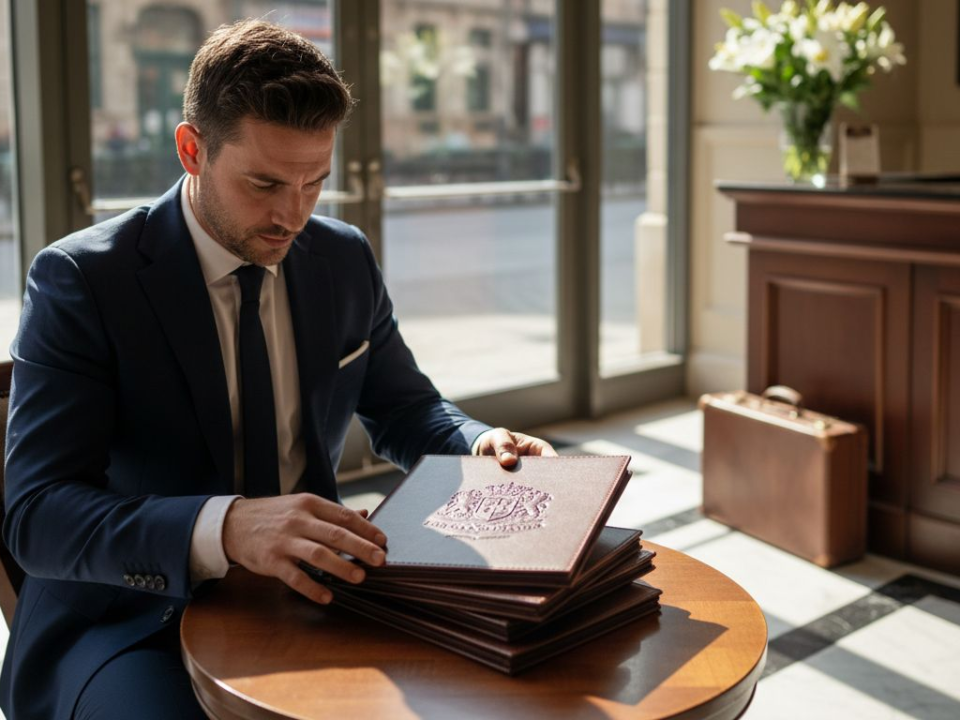
Unpack your entire shipment and lay covers out in a large space where you can examine them side by side. This reveals inconsistencies that individual inspection might miss. You’re looking for uniformity across every cover because guests will notice if one table’s covers differ from another’s.
Create a verification checklist covering these essential points:
- Leather colour consistency across all covers
- Logo or embossing positioning and clarity on every cover
- Stitching quality and thread colour throughout
- Edge binding finish and durability across the batch
- Interior page attachments working smoothly
- Cover weight and feel matching your approved samples
- No visible defects, marks, or damage to leather
Inspect covers under your actual dining light conditions. The lighting where you approved samples may differ from your dining rooms, and colour perception shifts accordingly. Check covers on tables set for service, not in a warehouse. You need confidence that they’ll look exactly as intended when guests open them.
Test functionality on a random sample of covers from different points in your shipment. Open and close them multiple times. Ensure page turns feel smooth. Verify that interior pockets hold contents securely. These functional tests reveal manufacturing issues that visual inspection alone might miss.
When you receive genuine leather menu covers, verify that the material quality matches your specifications and feels as luxurious as your samples suggested. Natural leather variations are acceptable, but they should remain within the range your approved samples demonstrated.
Document any discrepancies immediately and photograph issues before removing covers from packaging. This creates evidence if you need to contact your supplier about problems. Keep records of which covers have issues in case you need to return or replace them.
Systematic verification catches problems early when solutions are still possible.
Pro tip: Inspect covers in batches of 20 rather than individually; this sampling method catches manufacturing issues faster whilst remaining thorough enough to protect quality standards.
Elevate Your Venue’s Ambience with Custom Leather Menu Covers
Selecting the perfect menu covers for luxury venues involves addressing challenges like matching your venue’s unique character, ensuring durability through frequent use and updates, and creating a tactile guest experience that speaks volumes before a word is read. If you aim to reflect sophistication with premium materials such as full-grain or top-grain leather, and desire bespoke features including embossed logos and thoughtful interior design, it is essential to collaborate with experts who understand these priorities.
Experience the difference that expertly handcrafted leather accessories make for hotels and restaurants by exploring Leathera.co.uk. Our dedication to sustainable sourcing, precise customisation, and luxurious craftsmanship ensures that your menu covers not only withstand the rigours of high guest volumes but also reinforce your brand identity with every touch.
Discover how our tailored leather products can transform your service experience and impress your guests from first look to last word. Visit Leathera.co.uk now to explore bespoke options and receive personalised guidance on selecting the ideal covers that complement your venue’s style and operational needs. Don’t wait until worn or inconsistent covers undermine your venue’s luxury reputation—partner with Leathera and set new standards in hospitality elegance today.
Frequently Asked Questions
How do I assess my venue’s needs for custom menu covers?
To assess your venue’s needs, consider the character and style of your establishment, your guest expectations, and practical factors like menu update frequency and daily guest volume. Begin by documenting these aspects and consult with your designer to ensure that the menu covers reflect your venue’s identity and operational requirements.
What materials are best for luxury menu covers?
Leather is typically considered the gold standard for luxury menu covers due to its durability and elegant appearance. Choose between full-grain and top-grain leather based on whether you prefer covers that develop a unique patina over time or maintain a consistent look throughout their life.
How can I ensure the customisation reflects my brand?
To ensure customisation aligns with your brand, provide your designer with a clear creative brief that includes your logo, colour scheme, and design elements. Discuss specific details like logo placement, font choices, and material finishes to accurately convey your venue’s identity throughout the menu covers.
What should I look for during the final sample review?
During the final sample review, focus on the leather colour consistency, the clarity and depth of the branding, and the overall stitching quality. Assess the functionality of the covers by opening and closing them to ensure smooth operation and document any discrepancies before approving for production.
How can I maintain the quality of my custom menu covers?
To maintain the quality of your custom menu covers, implement a regular cleaning and care regimen as recommended for leather products. Observe wear patterns during service and replace any covers that show significant damage to uphold the luxurious experience for your guests.
What is the process for verifying completed menu covers?
The process for verifying completed menu covers involves unpacking your shipment in a large space and inspecting them for uniformity in colour, branding, and stitching quality. Use a verification checklist and conduct functional tests to ensure the covers perform well in a real dining environment before distributing them.