What Is Leather Customisation for Luxury Hospitality
February 18, 2026
Why Invest in Leather Menu Covers for Luxury Venues
February 21, 2026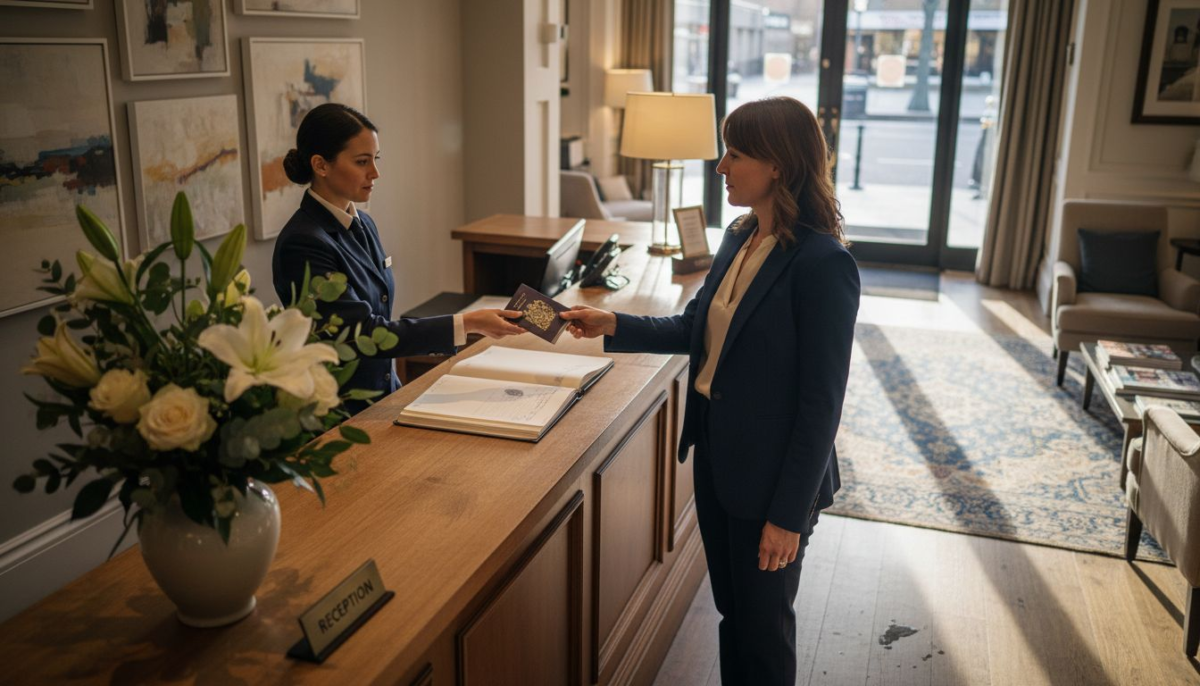
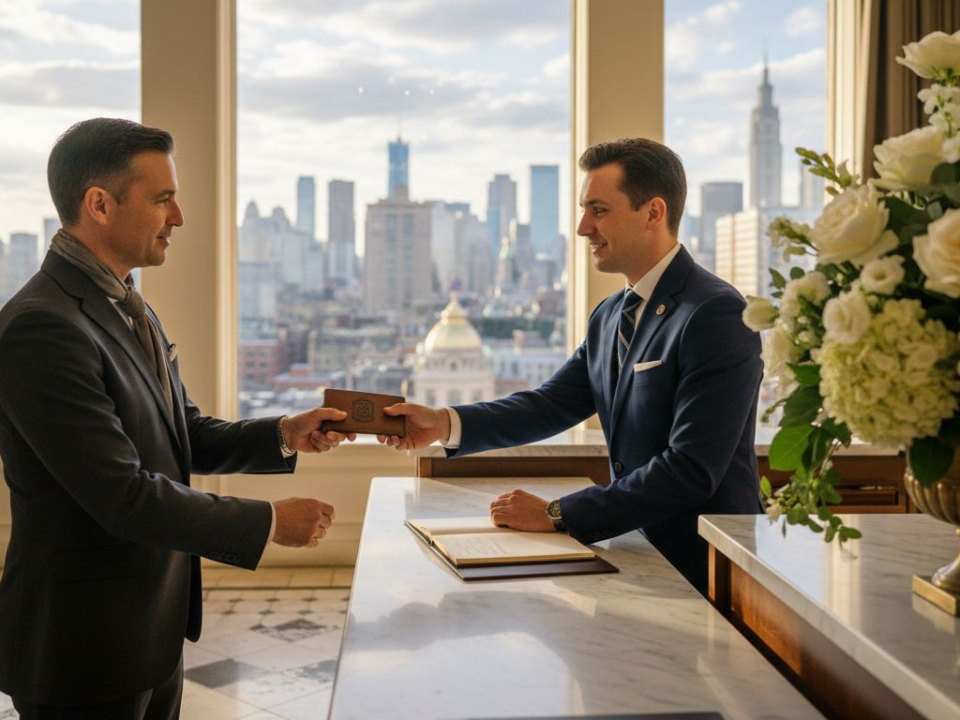
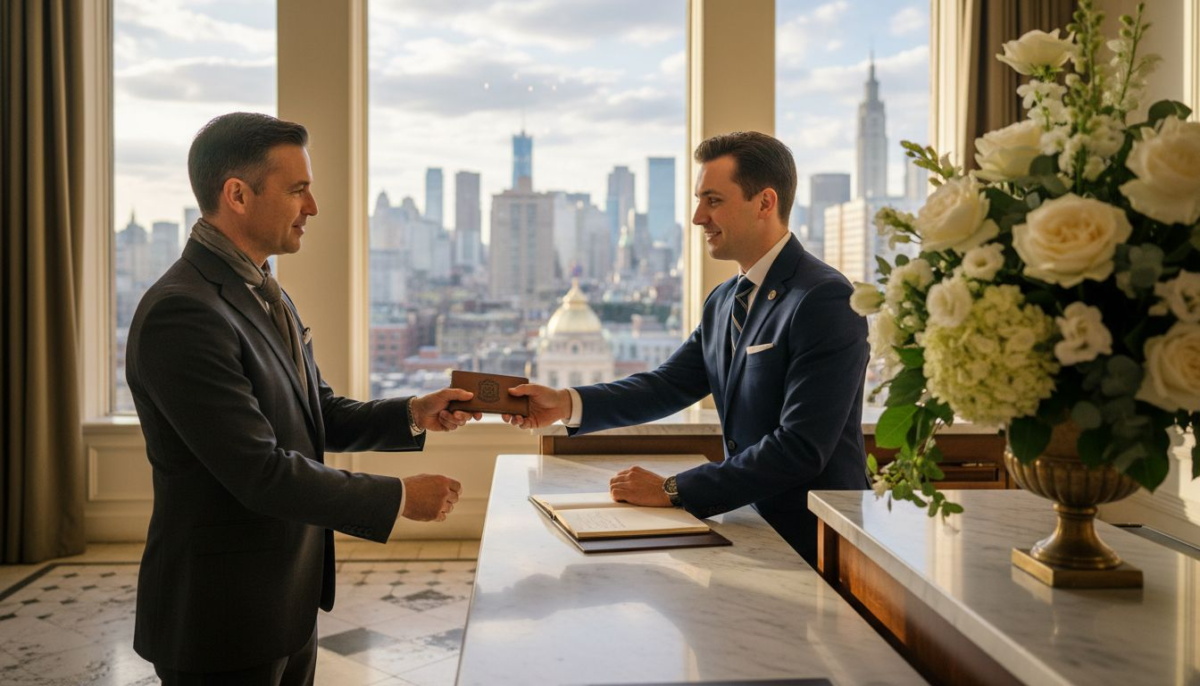
Every decision you make shapes the story your London venue tells, but nothing speaks louder than the quiet luxury of design. Research confirms that interior design directly influences guest experiences by shaping how they feel, relax, and remember their stay. When every leather accessory and crafted detail aligns with your hotel’s decor, you offer guests more than visual appeal—you deliver a signature experience reflecting true commitment to premium standards.
Table of Contents
- Defining Design’s Role in Guest Experience
- Variations of Hospitality Design Approaches
- How Bespoke Accessories Transform Venues
- Strategic Design for Lasting Guest Impressions
- Common Pitfalls in Hospitality Venue Design
Key Takeaways
| Point | Details |
|---|---|
| Design Enhances Guest Experience | Thoughtfully designed spaces significantly influence guests’ emotional states, comfort, and overall perceptions during their stay. |
| Strategic Design is Essential | Effective design should serve both aesthetic and functional purposes, facilitating seamless guest interactions and operational efficiency. |
| Bespoke Accessories Add Value | Customised leather accessories communicate attention to detail, elevating brand perception and creating lasting impressions on guests. |
| Coherence is Key | All design elements must align to present a consistent narrative; mismatched accessories can undermine the luxury experience guests expect. |
Defining Design’s Role in Guest Experience
Design is not merely decoration in your hotel. It is the silent communicator shaping how guests perceive their entire stay, from the moment they enter your foyer to the comfort they experience in their room.
Interior design directly influences guest experiences by affecting their emotional state, physical comfort, and lasting memories. When a guest settles into a thoughtfully designed space, they notice the quality of materials, the coherence of aesthetic choices, and the attention to detail.
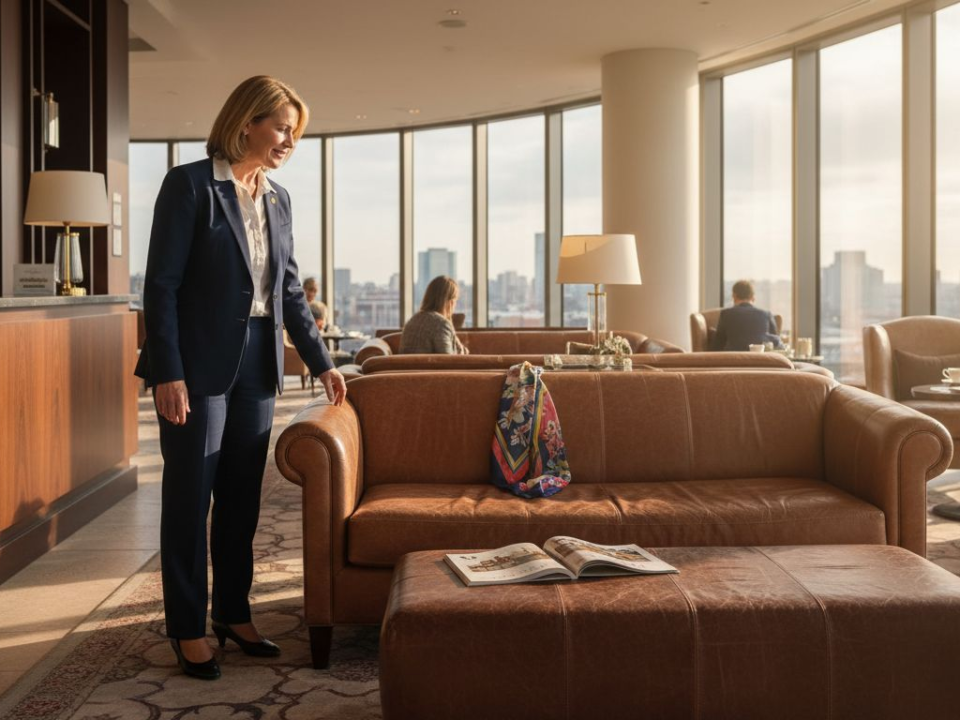
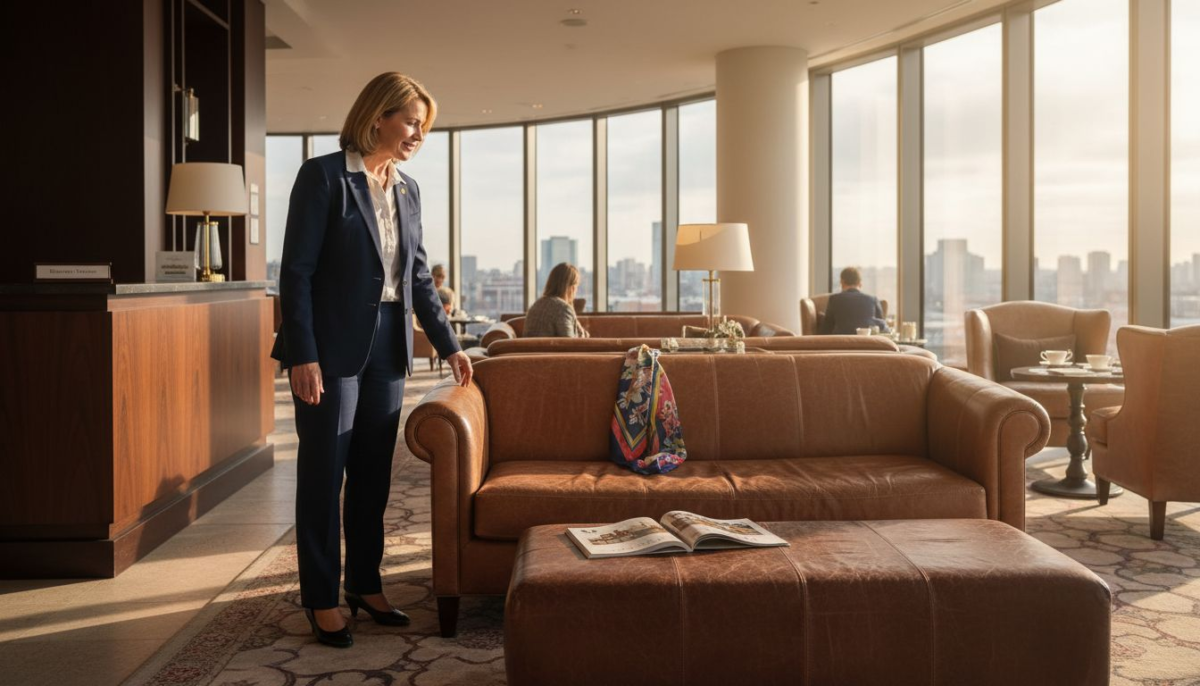
For luxury London establishments, this means every leather surface, every colour palette choice, and every spatial arrangement carries weight. Your guests are not just occupying rooms; they are experiencing your brand’s promise through physical design elements.
Design fulfils multiple critical functions:
- Establishes emotional connection: Guests form immediate impressions based on visual harmony and spatial comfort
- Supports operational flow: Thoughtful design reduces friction in guest journeys and staff interactions
- Communicates brand values: Premium materials and finishes signal your commitment to excellence
- Creates memorability: Distinctive design elements become reasons guests return and recommend your venue
- Enhances perceived value: Beautiful, cohesive spaces justify higher pricing and boost satisfaction ratings
Research shows that interior architecture and aesthetic appeal significantly affect guest comfort and perceptions, particularly in luxury segments where expectations run highest. In London’s competitive hospitality market, design differentiation matters profoundly.
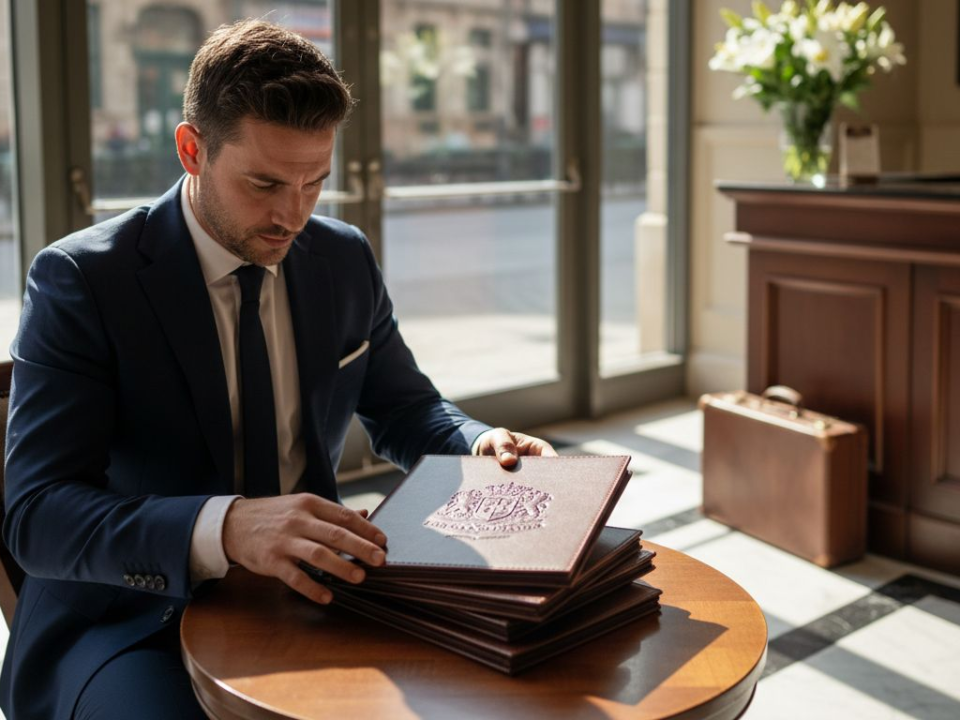
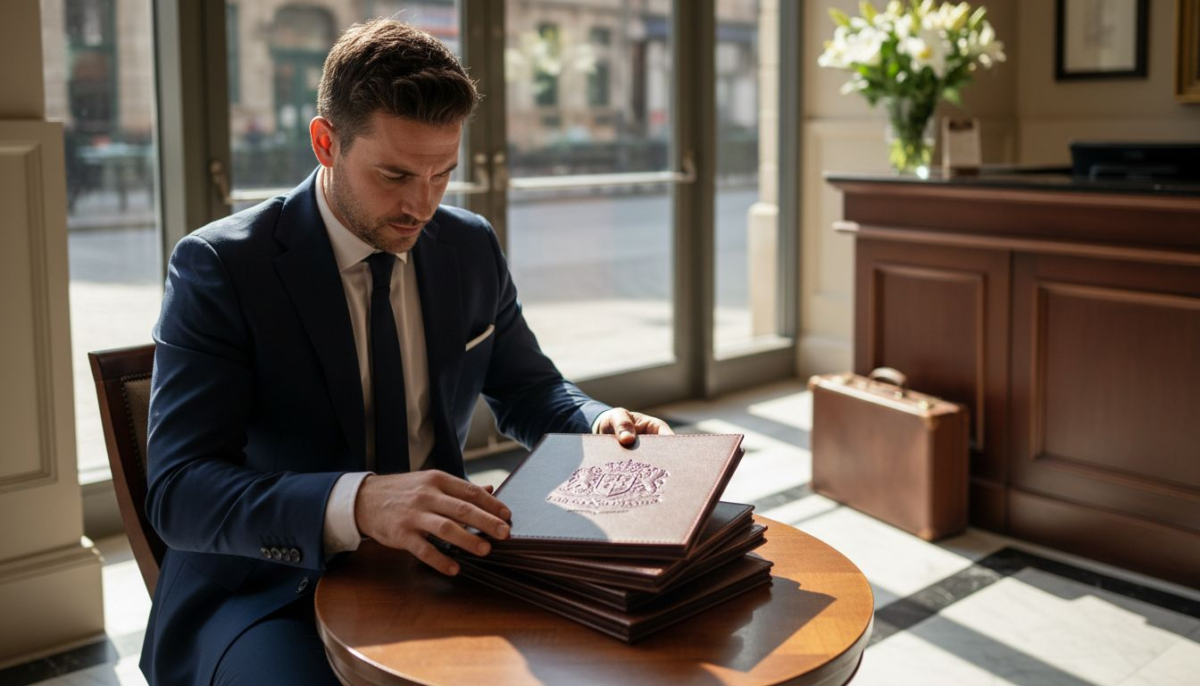
Consider how bespoke leather accessories integrate into this ecosystem. A handcrafted leather menu cover does not merely hold your offerings; it extends your venue’s design language into guests’ hands. Premium leather coasters continue that narrative on tables. Custom leather place mats reinforce consistency across dining experiences.
These elements work together to create what designers call design coherence: the sense that every touch point has been intentionally chosen and belongs within the same sophisticated vision.
Your design choices accumulate into a complete guest narrative that either feels curated and intentional or scattered and disconnected.
The distinction matters because guests in luxury establishments are highly attuned to this coherence. They notice when premium furnishings are undermined by careless accessories. They register when materials feel mismatched or execution appears rushed.
Effective design strategy requires understanding that every visible element serves your guest experience strategy. This includes often-overlooked pieces like bill presenters, coasters, and hotel room accessories that guests touch repeatedly during their stay.
Your role as a manager involves recognising design as a strategic tool, not an afterthought. It shapes guest satisfaction, influences repeat bookings, and supports your venue’s positioning within London’s luxury market.
Pro tip: Audit your existing guest touchpoints by spending an evening as a guest—notice which materials feel premium, which aesthetic choices feel intentional, and which accessories seem disconnected from your venue’s overall design narrative.
Variations of Hospitality Design Approaches
There is no single “correct” way to design a luxury hotel or restaurant. Different venues require different strategies based on their location, clientele, and operational goals.
Multidisciplinary design strategies including technological integration, sustainability, and cultural authenticity now shape how hospitality spaces evolve globally. For London’s premium establishments, understanding these variations allows you to select the approach that aligns with your brand identity and guest expectations.
Design approaches vary significantly across hospitality contexts:
- Minimalist-luxe: Clean lines, restrained colour palettes, premium materials as focal points—ideal for contemporary urban hotels
- Heritage-informed: Design rooted in local history, cultural references, and authentic storytelling—suits boutique venues with distinct identity
- Tech-integrated: Smart lighting, adaptive spaces, digital wayfinding seamlessly embedded into aesthetics—appeals to business travellers and younger guests
- Wellness-focused: Biophilic elements, natural materials, ergonomic design prioritising guest comfort and mental wellbeing
- Flexible-modern: Multipurpose spaces adapting to different guest needs and events throughout the day or season
Your choice depends on understanding guest expectations within your specific market segment. Current innovative hospitality design models identify guest priorities such as wellbeing, accessibility, and multifunctionality, reflecting the diversity of contemporary hospitality design.
Luxury leather accessories play different roles within each approach. In minimalist settings, bespoke leather menu covers become statement pieces—their quality and simplicity speak volumes. In heritage-informed venues, custom leather accessories connect visually to the narrative you are telling about your space’s history and character.
This table summarises how different hospitality design approaches incorporate luxury leather accessories:
| Design Approach | Role of Leather Accessories | Typical Venue Atmosphere |
|---|---|---|
| Minimalist-luxe | Statement pieces, highlight simplicity | Calm, uncluttered, serene |
| Heritage-informed | Visually connect to history | Rich, narrative, traditional |
| Tech-integrated | Subtle, functional with smart features | Sleek, modern, innovative |
| Wellness-focused | Emphasise natural, tactile comfort | Relaxing, biophilic, restorative |
| Flexible-modern | Adapt to multipurpose needs | Versatile, energetic, dynamic |
Consider your venue’s unique position within London’s hospitality landscape. Are you positioning as cutting-edge and contemporary? Rooted in British tradition? A wellness sanctuary? Your design approach should align with this positioning across every touchpoint.
The most successful venues do not borrow design approaches from competitors—they develop approaches that authentically express what they offer.
Misalignment happens when design approaches feel disconnected from venue purpose. A business hotel adopting excessive heritage styling confuses guests. A wellness-focused restaurant with harsh industrial aesthetics contradicts its message.
Your leather accessories must reinforce your chosen approach. They should feel purposeful within your overall design narrative, not added as afterthoughts.
Pro tip: Identify three London luxury venues you admire, analyse their design approach, then honestly assess whether your current accessories and finishes align with your own brand positioning or feel borrowed from somewhere else.
How Bespoke Accessories Transform Venues
Bespoke accessories are not luxury add-ons. They are strategic tools that reshape how guests perceive and interact with your space.
When you select handcrafted leather menu covers instead of mass-produced alternatives, you are making a statement about your venue’s standards. When custom leather coasters sit on guest tables, they communicate attention to detail. Bespoke accessories and customised furnishings elevate luxury and create memorable ambiances, transforming ordinary spaces into distinctive environments guests remember and recommend.
The transformation works through several tangible mechanisms:
- Brand consistency: Every bespoke piece reinforces your visual identity across all touchpoints
- Perceived value elevation: Premium materials and craftsmanship justify higher pricing and guest expectations
- Operational efficiency: Custom designs optimise space flow and staff functionality, not just aesthetics
- Competitive differentiation: Unique accessories create talking points that guests share on social media and in reviews
- Emotional resonance: Thoughtful details trigger positive emotional responses that extend beyond the service itself
Consider what happens when a guest picks up a bill presenter. If it is generic plastic or cheap leather, they form an instant negative impression that undermines your premium pricing. If it is supple, perfectly finished leather with your branding subtly integrated, they hold something that feels special—something worth photographing.
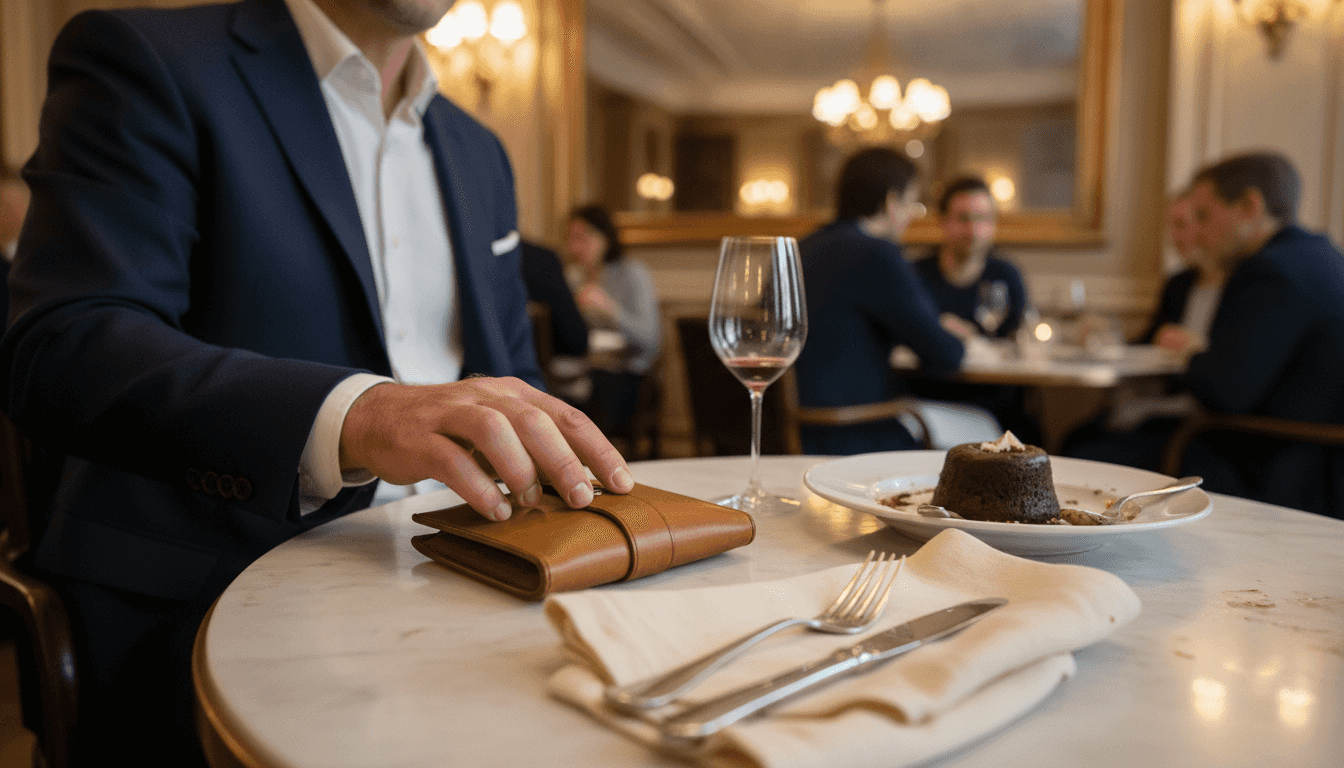
That moment matters more than you might think. Recent hospitality trends emphasise bespoke solutions as key differentiators offering personalised and authentic guest environments. In London’s saturated luxury market, these small moments accumulate into competitive advantages.
When you commission custom leather place mats, hotel room accessories, and coasters, you are not simply purchasing items. You are curating a sensory experience that aligns with your venue’s positioning and values.
The transformation extends to staff experience too. Team members feel pride presenting bespoke accessories to guests. They sense that management has invested in quality, which influences how they perform their roles. This translates into service that feels more attentive and genuine.
Here is a comparison of the long-term impact between bespoke and mass-produced accessories in luxury venues:
| Accessory Type | Guest Perception Effect | Durability and Value | Impression on Staff |
|---|---|---|---|
| Bespoke leather | Exclusive, memorable | High, long-lasting | Pride and ownership |
| Mass-produced generic | Ordinary, unremarkable | Prone to quick wear | Seen as replaceable tools |
Bespoke accessories transform venues because they signal that every decision—from napkin placement to material selection—reflects intentional curation, not budget constraints or convenience.
Mass-produced alternatives create the opposite effect. Guests notice when accessories feel interchangeable with what they might find in dozens of other venues. Bespoke pieces whisper exclusivity. They suggest your venue knows who it is and has invested accordingly.
For London luxury managers, this is particularly powerful. Your clientele expects differentiation. They are willing to pay premium rates, but only if the experience justifies those rates at every sensory level. Bespoke leather accessories bridge the gap between premium ambition and tangible execution.
Pro tip: Photograph your existing accessories through a guest’s eyes—coasters, menu covers, place mats, bill presenters—and honestly assess whether each piece feels intentional or like it was ordered from a catalogue without consideration for your venue’s overall narrative.
Strategic Design for Lasting Guest Impressions
Lasting impressions are not created by accident. They emerge when every design choice—from colour schemes to leather accessories—works together to reinforce your venue’s narrative.
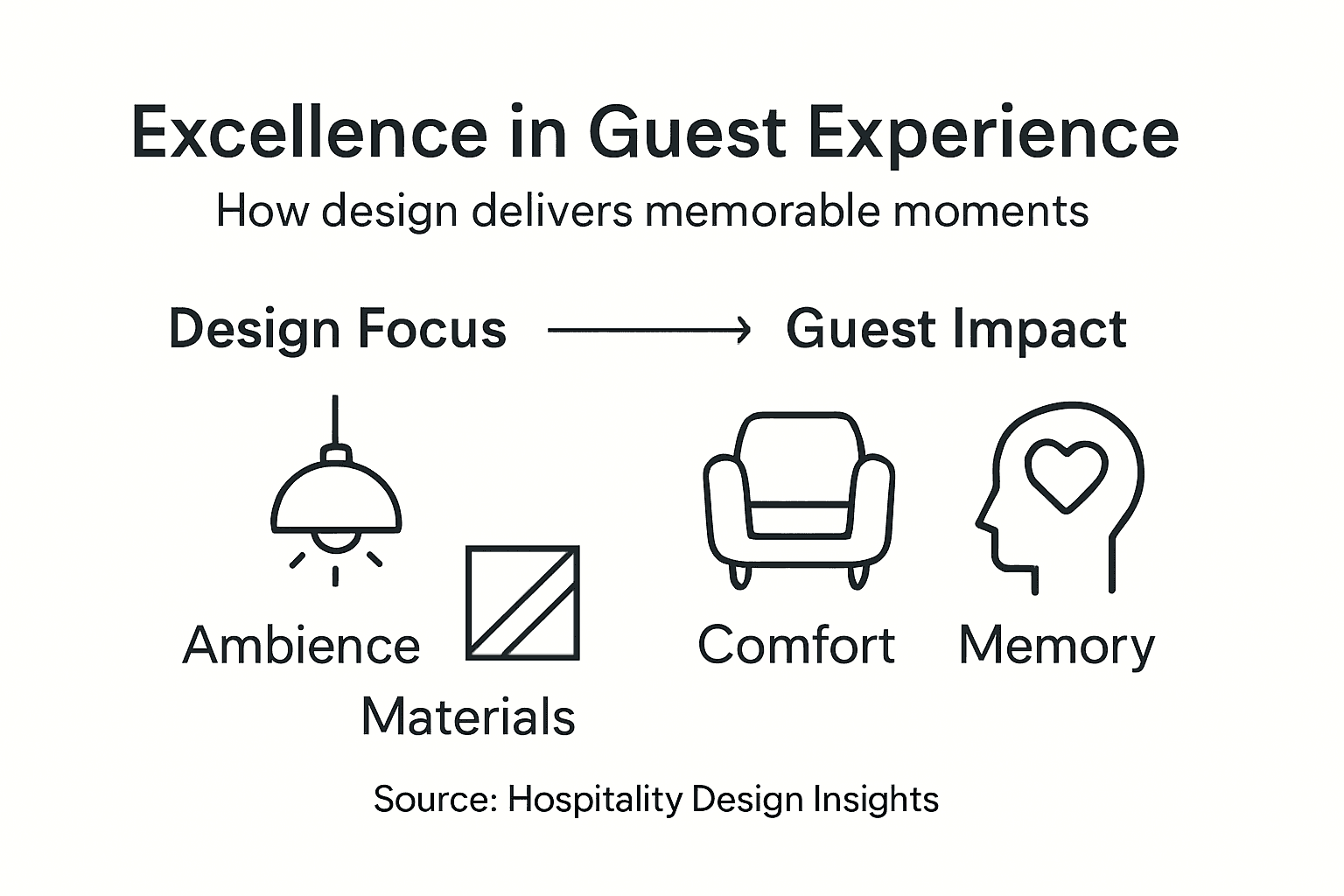
Guests form opinions quickly, but those opinions harden through repeated sensory confirmation. When a guest experiences consistent design coherence across multiple touchpoints, they internalize a perception of quality and intentionality that persists long after checkout.
Strategic design that aligns with guest preferences fosters lasting impressions and loyalty, encouraging repeat visitation and positive word-of-mouth recommendations. This is not marketing—this is experience design that compels genuine advocacy.
Consider how impressions actually form:
- First glance: Visual harmony and material quality signal your standards instantly
- First touch: When guests handle leather menu covers or coasters, they evaluate craftsmanship through tactile sensation
- Accumulation: Repeated exposure to consistent design elements builds confidence in your brand’s reliability
- Emotional encoding: Beautiful, thoughtful spaces trigger emotional responses that feel personal rather than commercial
- Memory formation: Distinctive details become the details guests remember and mention to others
For London luxury venues, this matters profoundly. Your clientele visits multiple high-end establishments annually. They compare. They notice gaps between promise and execution.
Bespoke storytelling and personalisation in design deepens guest engagement and leaves memorable impressions through sensory experiences that align with brand narratives. Your leather accessories are not incidental—they are narrative tools that communicate your venue’s values at a tactile level.
A guest holding a premium leather menu cover experiences your commitment to quality in their hands. That sensation reinforces everything else: the service standard, the pricing, the attention you claim to offer.
When design details misalign, impressions fracture. A luxury restaurant with impeccable furnishings undermined by generic plastic coasters sends a confusing message. Guests wonder: Is this venue truly premium, or does it cut corners on things that matter?
Strategic design works because it answers that question unambiguously. Every element—from wall colours to leather finishes—says the same thing: this venue knows what it is and executes accordingly.
Lasting impressions depend on whether guests experience your design as a coherent story or as disconnected choices that happen to occupy the same space.
Memory research shows that distinctive sensory details stick far longer than generic experiences. Guests forget standard hotel rooms. They remember the one with extraordinary leather details, exceptional finishes, and thoughtful material selection.
Your goal is designing that distinction intentionally, not hoping it happens accidentally.
Pro tip: Map your guest journey from arrival through departure, identifying every touchpoint where design communicates value, then audit whether your leather accessories and finishes support or contradict the overall narrative you are attempting to build.
Common Pitfalls in Hospitality Venue Design
Most hospitality design failures are not the result of bad taste. They stem from decisions that prioritise one factor—usually aesthetics or budget—whilst neglecting everything else that makes a venue function.
When design looks beautiful but guests struggle to navigate the space, or staff cannot move efficiently between service areas, the entire experience suffers. Beauty without functionality is not luxury; it is performance theatre that reveals itself as hollow the moment guests try to use the space.
Common design mistakes include prioritising aesthetics over operational functionality, resulting in poor guest traffic management and inefficient workflows. These errors undermine both guest experience and staff efficiency, creating costly operational challenges that persist long after opening day.
The most frequent pitfalls include:
- Aesthetic-first thinking: Choosing visual impact without considering how staff actually works or guests actually move
- Material durability neglect: Selecting beautiful finishes that cannot withstand daily use, leading to rapid deterioration
- Acoustic and lighting oversights: Creating spaces that sound harsh or feel poorly lit, affecting comfort without obvious cause
- Staff exclusion from design: Planning without input from those who work in the space daily
- Workflow dysfunction: Failing to optimise paths between kitchen, service areas, and dining spaces
For leather accessories specifically, a common mistake is choosing beautiful pieces that cannot withstand repeated guest handling. A stunning menu cover that scratches easily or requires constant restoration becomes a liability, not an asset.
Focusing too much on visual impact without considering operational realities and excluding staff input creates design that reduces guest comfort and increases maintenance costs. Your leather accessories should be durable enough to genuinely enhance experience rather than create stress about preservation.
Another pitfall: purchasing one-off designer pieces that do not integrate with your overall aesthetic. A single premium leather coaster looks odd alongside generic table settings. Design coherence requires that all elements—from wall colours to accessories—communicate the same message intentionally.
Budget pressure often creates false economies. Choosing cheap leather for high-traffic areas costs more in the long term through replacement and repair than investing in durable alternatives from the start.
Poor hospitality design fails because it optimises for the wrong priority—it asks “What looks most impressive?” instead of “What serves guests and staff most effectively?”
London’s luxury market particularly punishes these mistakes. Discerning guests notice immediately when design is aspirational rather than functional. They sense when materials were chosen for appearance rather than performance.
The solution is designing with operational reality in mind. Involve your teams. Test workflows. Choose materials for durability alongside beauty.
Pro tip: Before finalising any design decision or purchasing accessories, spend time observing your space during service—watch how staff moves, how guests navigate, where materials experience actual wear—then assess whether your chosen pieces support or hinder that reality.
Elevate Your Guest Experience with Bespoke Leather Accessories
Design coherence and guest touchpoint intentionality are essential to luxury hospitality venues looking to stand out in London’s competitive market. The article highlights how every detail from leather menu covers to bill presenters contributes to guest impressions and operational efficiency. If you have noticed that your accessories feel generic or disconnected from your venue’s narrative, it is time to transform these seemingly small elements into powerful statements of quality and brand identity.
Leathera.co.uk specialises in delivering handcrafted, premium leather accessories designed specifically for hospitality professionals who understand that durability, elegance, and tactile experience matter deeply. Our bespoke leather products such as coasters, place mats, and hotel room accessories ensure your venue’s aesthetic is maintained consistently across all guest interactions—helping you avoid common design pitfalls while promoting emotional connection through every touchpoint.
Ready to amplify your venue’s design strategy and create lasting impressions your guests will remember? Explore our full range at Leathera.co.uk and discover how customised leather accessories can provide true design coherence and elevate guest comfort. View our selection and customer testimonials to see how top London venues trust us to support their brand excellence.
Discover handcrafted leather menu covers and accessories that bring sophistication and functionality together perfectly.
Explore bespoke solutions that align with your hospitality design approach
Visit Leathera.co.uk now to invest in purposeful design that enhances both guest experience and operational flow.
Frequently Asked Questions
How does design influence guest experience in luxury hotels?
Design plays a crucial role in shaping guests’ perceptions and emotions during their stay. Thoughtful design influences comfort, creates emotional connections, and communicates the establishment’s brand values, ultimately enhancing the overall guest experience.
What are the key functions of hotel design in guest satisfaction?
Hotel design establishes emotional connections, supports operational flow, communicates brand values, creates memorability, and enhances perceived value, all of which contribute to increased guest satisfaction and loyalty.
Why are bespoke accessories important in luxury venues?
Bespoke accessories enhance brand consistency, elevate perceived value, and provide operational efficiency. They contribute to a memorable guest experience, reinforcing the venue’s commitment to quality and attention to detail.
What common design pitfalls should be avoided in hospitality?
Common pitfalls include prioritising aesthetics over functionality, neglecting material durability, and not involving staff in the design process. These mistakes can lead to poor guest experiences and operational inefficiencies.