
Why Bespoke Leather Decor Boosts Guest Loyalty by 25%
February 28, 2026
Personalise Hospitality Leather Gifts: Boost Loyalty 20%
March 2, 2026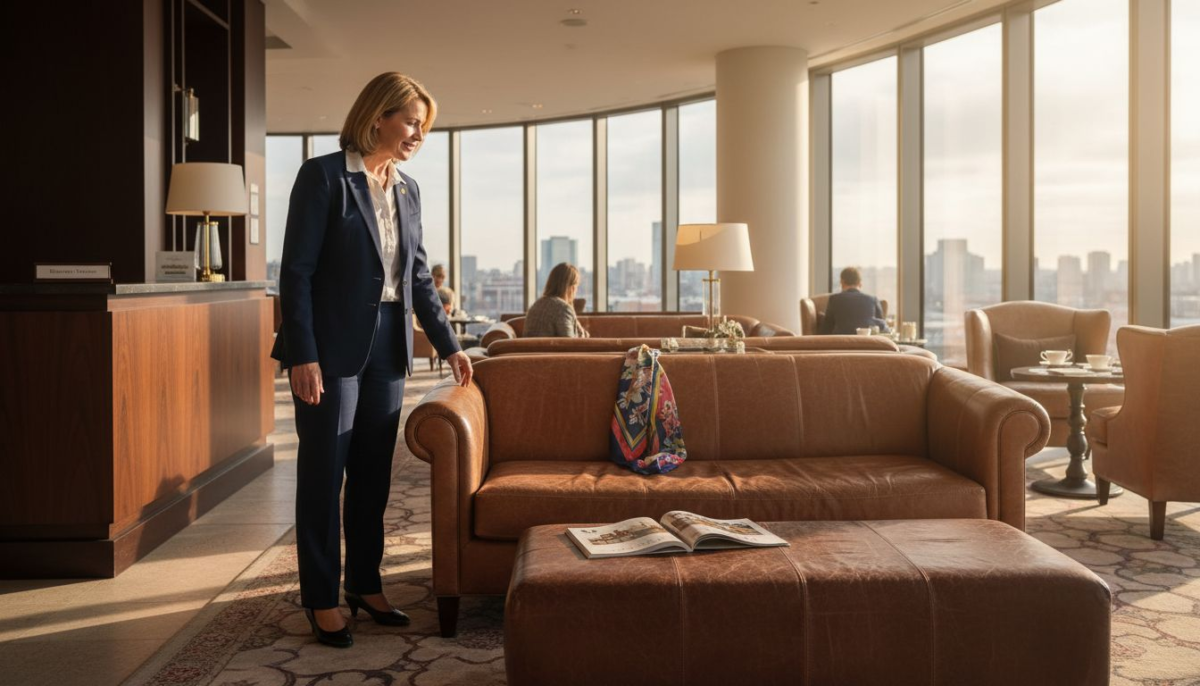
Many hospitality venues choose cheaper leather thinking it suffices for luxury standards, only to face early wear and dissatisfied guests. Understanding the qualities of luxury hospitality leather can transform guest experience and strengthen brand prestige. This guide unpacks types, sourcing, craftsmanship, customization, and maintenance of premium leather for hospitality environments, giving you clarity to make informed decisions that elevate your venue.
Table of Contents
- Understanding Luxury Leather In Hospitality
- Craftsmanship And Material Sourcing
- Customization And Branding Through Leather
- Maintenance And Longevity Of Hospitality Leather
- Luxury Leather Versus Alternatives: A Comparison
- Common Misconceptions About Luxury Hospitality Leather
- Practical Applications And Case Studies
- Elevate Your Venue With Bespoke Luxury Leather Accessories
- Frequently Asked Questions
Key Takeaways
| Point | Details |
|---|---|
| Luxury leather boosts guest satisfaction | Premium leather accessories significantly enhance guest perception and venue prestige. |
| Full-grain and vegetable-tanned leathers excel | These varieties offer superior durability, breathability, and eco-friendliness for commercial use. |
| Customization strengthens brand identity | Embossing and bespoke sizing create memorable experiences and reinforce exclusivity. |
| Proper maintenance extends lifespan | Routine care protocols maximize investment and sustain guest impressions in high-traffic environments. |
| Synthetic alternatives fall short | Artificial materials lack breathability and durability, making them unsuitable for luxury hospitality. |
Understanding Luxury Leather in Hospitality
Luxury hospitality leather goes beyond simple aesthetics. It represents quality, durability, and a tangible connection to guest perception. When you choose the right leather, you invest in an experience that guests can see, touch, and remember.
Three main leather varieties dominate the hospitality market: full-grain, top-grain, and corrected grain. Full-grain leather retains the complete natural surface, displaying authentic texture and developing a rich patina over time. Top-grain leather has the surface sanded slightly to remove imperfections, creating a more uniform appearance but sacrificing some natural character. Corrected grain leather undergoes heavy processing to mask defects, often resulting in a plastic-like finish that fails to age gracefully.
Durability differences are stark. Full-grain leather retains 100% of its natural grain surface and can last decades with proper care, making it ideal for high-end hospitality applications where longevity matters. Top-grain leather performs adequately but shows wear more quickly under commercial conditions. Corrected grain leather may look acceptable initially but deteriorates rapidly in demanding environments, disappointing guests who expect authenticity.
Tanning methods profoundly influence leather quality and performance:
- Vegetable tanning uses natural plant extracts, producing eco-friendly leather with superior aging characteristics and durability
- Chrome tanning employs chemical processes for faster production but creates leather with shorter lifespans and environmental concerns
- Combination tanning blends both methods, balancing speed with some quality retention
For luxury hospitality venues, full-grain leather processed through vegetable tanning delivers unmatched quality. This combination ensures your custom leather products for hospitality maintain their appeal through years of guest interactions, building your reputation with every touchpoint.
Craftsmanship and Material Sourcing
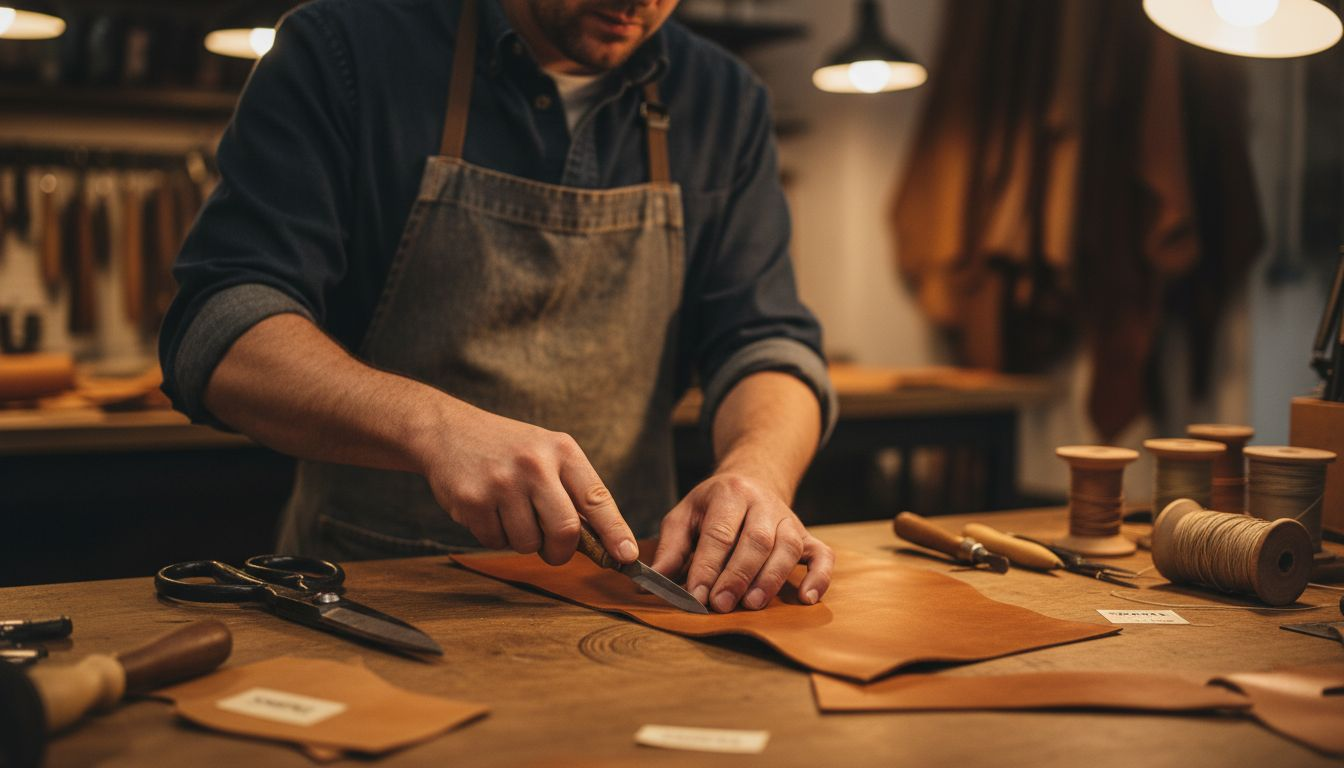
Expert craftsmanship transforms quality leather into exceptional hospitality accessories. Hand-stitching creates stronger seams than machine stitching, preventing premature failure in high-use items like menu covers and bill presenters. Edge finishing techniques, where artisans burnish and seal leather edges, add both visual refinement and structural integrity that guests notice immediately.
Sustainable leather sourcing has become essential for brand reputation. Guests increasingly value ethical practices, and your material choices reflect your commitment to responsible luxury. Vegetable-tanned leather can last 20-30% longer than chrome-tanned leather in hospitality applications, offering both environmental benefits and superior performance.
Vegetable tanning produces leather that breathes naturally, resists moisture damage, and develops an attractive patina that enhances character over time. Chrome tanning creates leather that may crack or peel after repeated handling, disappointing guests who associate luxury with lasting quality. The choice directly impacts how your venue is perceived and remembered.
Craftsmanship quality determines tactile appeal. When guests handle a beautifully finished leather menu cover or coaster, they immediately sense the attention to detail. Smooth edges, consistent stitching, and supple texture communicate luxury without words. These subtle cues build confidence in your establishment and justify premium positioning.
Pro Tip: Request supplier certifications such as Leather Working Group membership or ISO 14001 environmental management verification to ensure sustainable sourcing claims are authentic and protect your brand reputation.
Authentic premium craftsmanship in hospitality creates lasting impressions that synthetic alternatives cannot replicate. The investment in expertly crafted, sustainably sourced leather pays dividends through enhanced guest satisfaction and reduced replacement costs over time.
Customization and Branding Through Leather
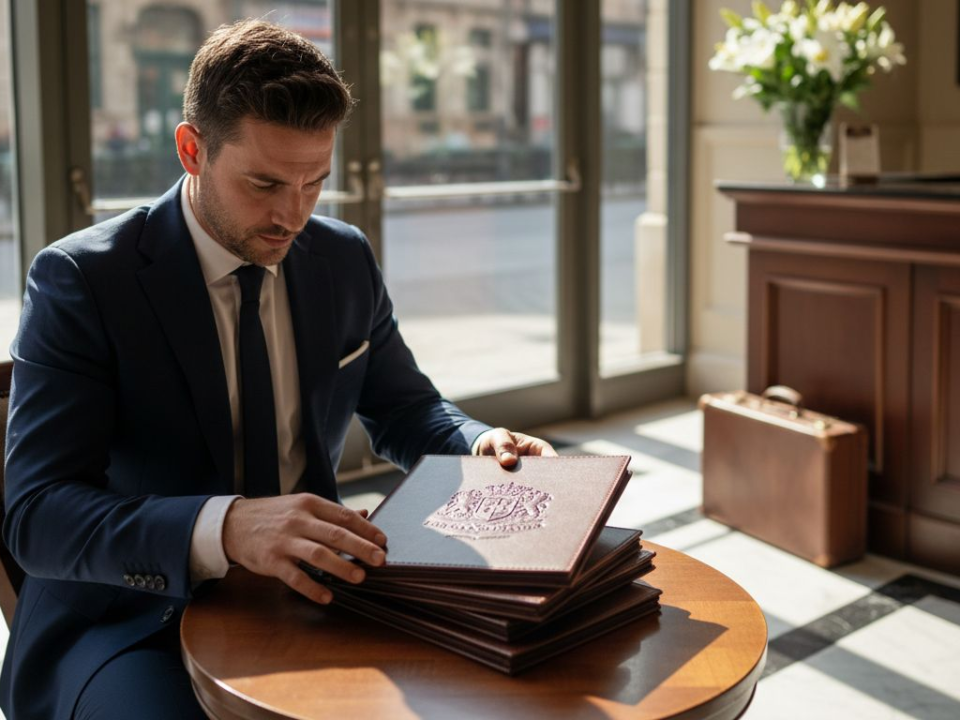
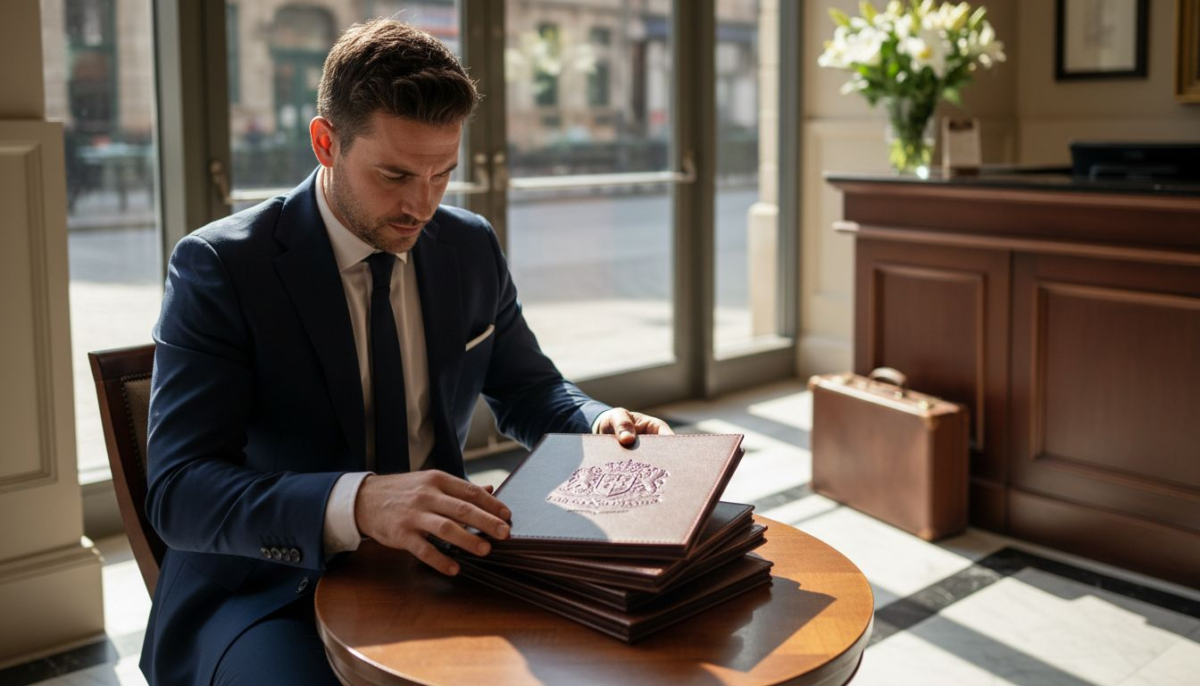
Customization transforms functional leather accessories into powerful brand ambassadors. Embossing techniques allow you to incorporate logos, monograms, or distinctive patterns directly into leather surfaces, creating visual recognition that reinforces your identity. Dyeing options enable precise color matching to existing brand palettes, ensuring consistency across all guest touchpoints.
Stamping methods range from subtle debossing to bold foil applications, each suited to different aesthetic goals. Hot stamping with metallic foils creates dramatic contrast for modern brands, while blind embossing offers understated elegance for traditional luxury venues. The technique you choose should align with your overall brand story and target guest demographics.
Bespoke sizing and shapes optimize both functionality and style:
- Custom menu cover dimensions accommodate specific menu formats without awkward gaps or overhang
- Tailored coaster sizes protect surfaces while complementing glassware and table settings
- Personalized bill presenters sized for check presentment workflows enhance operational efficiency
Customization directly impacts guest experience metrics. Luxury hotels in London reported a 12% increase in repeat bookings after introducing customised leather menu covers and coasters, demonstrating measurable returns on investment. Guests remember distinctive touches that reflect thoughtful attention to detail, translating positive impressions into loyalty.
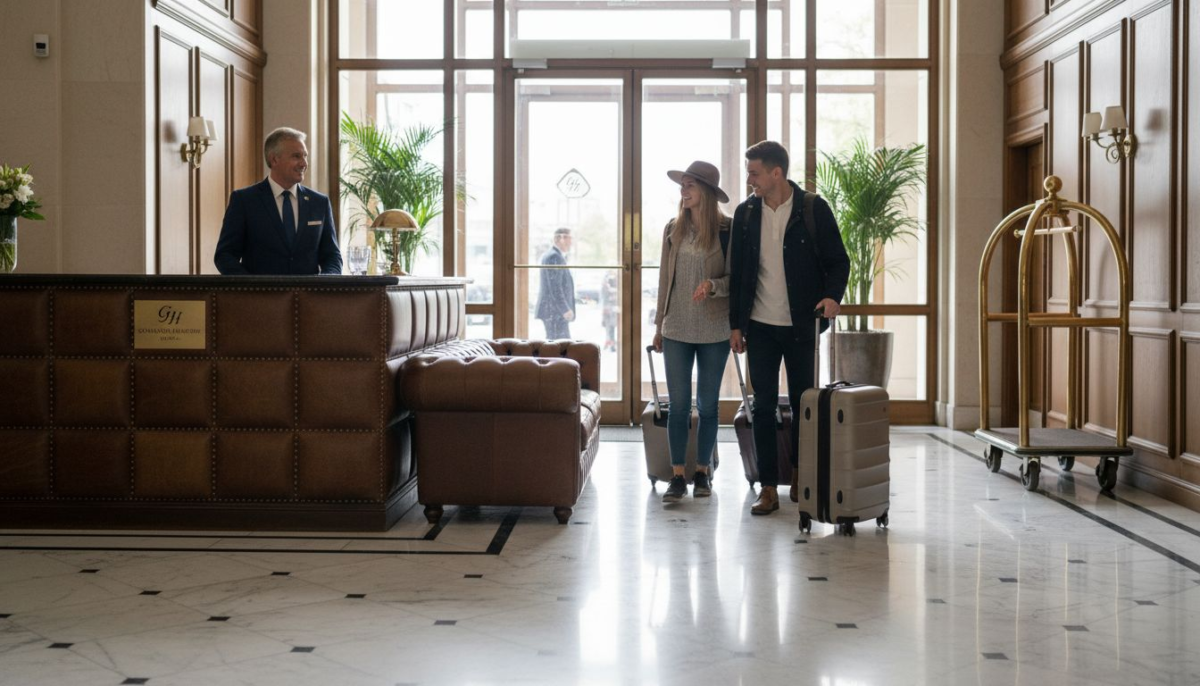
Brand identity strengthens when every element tells a cohesive story. Leather accessories customized with consistent design language create memorable moments throughout the guest journey. From check-in folder to in-room amenities to restaurant service items, coordinated leather accents reinforce exclusivity and justify premium pricing.
Pro Tip: Select customization options that enhance rather than overwhelm. Subtle branding on high-quality leather often communicates luxury more effectively than bold logos, allowing material quality and craftsmanship to speak for themselves.
Exploring leather customization for luxury hospitality reveals opportunities to differentiate your venue in competitive markets. Understanding how bespoke leather decor boosts guest loyalty empowers you to make strategic decisions that elevate your brand while delivering tangible business results.
Maintenance and Longevity of Hospitality Leather
Proper maintenance protects your investment in luxury leather accessories and sustains guest impressions. Full-grain and vegetable-tanned leathers require different care protocols than other materials. Regular cleaning removes surface debris without damaging natural oils, while conditioning replenishes moisture that evaporates in climate-controlled environments.
Routine maintenance schedules should fit operational realities:
- Daily: Light dusting with soft, dry cloths after service periods
- Weekly: Gentle cleaning with pH-neutral leather cleaner on high-touch items
- Monthly: Conditioning treatments to maintain suppleness and prevent drying
- Quarterly: Deep cleaning and assessment for any repair needs
Environmental factors significantly affect leather aging. Humidity levels below 40% or above 70% accelerate deterioration, causing either brittleness or mold growth. Direct sunlight fades colors and weakens fibers, while temperature fluctuations stress leather structure. Positioning accessories away from windows, heating vents, and air conditioning units extends their lifespan considerably.
Common maintenance mistakes accelerate wear unnecessarily. Using household cleaners with harsh chemicals strips protective oils and damages finish. Over-conditioning creates sticky residue that attracts dirt. Ignoring small stains or scratches allows damage to spread, requiring costly repairs or replacement. Proper routine conditioning and cleaning maximize leather lifespan in high-use hospitality settings, preventing these issues.
Scheduling maintenance in busy hospitality environments requires planning. Designate specific team members responsible for leather care to ensure consistency. Create simple checklists that staff can follow during slow periods. Store approved cleaning products in accessible locations to encourage regular use.
Proactive maintenance reduces replacement costs dramatically. A well-maintained full-grain leather menu cover can serve guests for a decade or more, while neglected items may fail within two years. The modest time investment in routine care delivers substantial returns through extended product life and sustained guest satisfaction.
Guidance on how to select luxury leather accessories includes maintenance considerations that influence long-term value and operational efficiency.
Luxury Leather Versus Alternatives: A Comparison
Data-driven comparison reveals why luxury leather outperforms synthetic and alternative materials in hospitality settings. Durability differences alone justify the investment for venues committed to excellence.
| Feature | Full-Grain Leather | Synthetic Leather |
|---|---|---|
| Lifespan | 10+ years with proper care | 2-3 years before significant wear |
| Breathability | Excellent natural porosity | Poor, traps moisture |
| Aging Character | Develops attractive patina | Cracks and peels |
| Guest Perception | Authentic luxury | Budget compromise |
| Environmental Impact | Biodegradable, sustainable sourcing available | Petroleum-based, non-biodegradable |
Synthetic leather typically lasts 2-3 years under commercial hospitality use before significant wear, compared to 10+ years for full-grain leather. This stark difference in longevity transforms initial cost calculations when you consider replacement frequency and disposal costs.
Breathability affects both functionality and guest experience. Genuine leather’s natural porosity allows moisture vapor to escape, preventing the clammy feel common with synthetic materials. Guests notice this difference immediately when handling menu covers or resting arms on leather place mats, registering comfort at a subconscious level.
Aging characteristics diverge dramatically. Full-grain leather develops a rich patina that enhances visual appeal and communicates quality over time. Synthetic materials deteriorate visibly, with cracking, peeling, and color loss that signal neglect to discerning guests. The contrast becomes more pronounced with each passing year.
Cost implications favor genuine leather when analyzed over product lifecycle:
- Lower replacement frequency reduces long-term expenditure
- Superior durability minimizes operational disruptions from failed items
- Enhanced guest perception justifies premium pricing and increases revenue
- Sustainable materials align with corporate responsibility goals, avoiding reputational risks
Investing in full-grain leather delivers superior longevity and guest experience that synthetic alternatives cannot match, making it the only viable choice for venues committed to authentic luxury and operational excellence.
Environmental impacts matter increasingly to guests and corporate stakeholders. Vegetable-tanned leather biodegrades naturally, while synthetic materials persist in landfills for decades. Sustainable sourcing practices for genuine leather support ethical supply chains, whereas petroleum-based synthetics contribute to fossil fuel dependence.
Understanding the differences highlighted in PU vs genuine leather menu covers empowers informed decisions that protect brand reputation and deliver measurable value.
Common Misconceptions About Luxury Hospitality Leather
Myths about leather durability, sourcing, and suitability persist despite clear evidence. Dispelling these misconceptions prevents costly procurement mistakes and protects brand reputation.
Not all leather offers equal durability. Grade and tanning method determine performance characteristics far more than generic “leather” designation. Full-grain vegetable-tanned leather vastly outperforms corrected grain chrome-tanned alternatives in commercial hospitality environments. Assuming equivalence based on “leather” labeling alone leads to disappointing results and wasted investment.
Cheaper leather fails to meet luxury standards guests expect. Budget materials may resemble quality leather initially but reveal their limitations quickly under regular use. Surface finishes crack, colors fade, and structural integrity deteriorates, communicating carelessness rather than quality. The savings evaporate when premature replacement becomes necessary.
Synthetic leather cannot replicate genuine leather’s performance:
- Artificial materials lack natural breathability, creating uncomfortable tactile experiences
- Plasticized surfaces peel and crack rather than developing attractive patina
- Chemical odors persist in synthetic products, while genuine leather has pleasant natural scent
- Guests immediately recognize the difference, undermining luxury positioning
Sustainability claims require careful verification. Not all “eco-friendly” leather meets legitimate standards, and greenwashing pervades the industry. Durability varies significantly; full-grain and vegetable-tanned leathers last considerably longer than others, making them genuinely sustainable through extended lifespan and reduced replacement frequency.
Misunderstandings about maintenance requirements deter some venues from choosing genuine leather. Reality proves simpler than perception suggests. Basic care protocols take minimal time and require no specialized expertise. The return on this modest investment far exceeds the effort involved.
Educating procurement teams and operational staff on these realities improves leather product selection. When decision-makers understand true quality indicators and performance differences, they make choices that enhance guest experience and deliver lasting value. Knowledge transforms leather from a commodity purchase into a strategic brand investment.
Guidance on how to select luxury leather accessories addresses common misconceptions and provides clarity for confident decision-making.
Practical Applications and Case Studies
Real-world examples demonstrate how luxury hospitality venues leverage bespoke leather accessories to elevate guest satisfaction and achieve measurable business results. These applications span multiple touchpoints throughout the guest journey.
Menu covers represent prime opportunities for leather application. Custom-sized covers protect menus while showcasing brand identity through embossed logos or distinctive colors. Guests handle these items multiple times per visit, creating repeated brand impressions that reinforce positioning. High-quality leather menu covers withstand countless interactions without visible wear, maintaining pristine appearance that reflects operational excellence.
Leather coasters protect surfaces while adding sophisticated detail to table settings. Coordinated with other leather accessories, they create visual cohesion that guests recognize subconsciously. The tactile experience of setting a glass on supple leather rather than paper or cork elevates the moment, contributing to overall satisfaction.
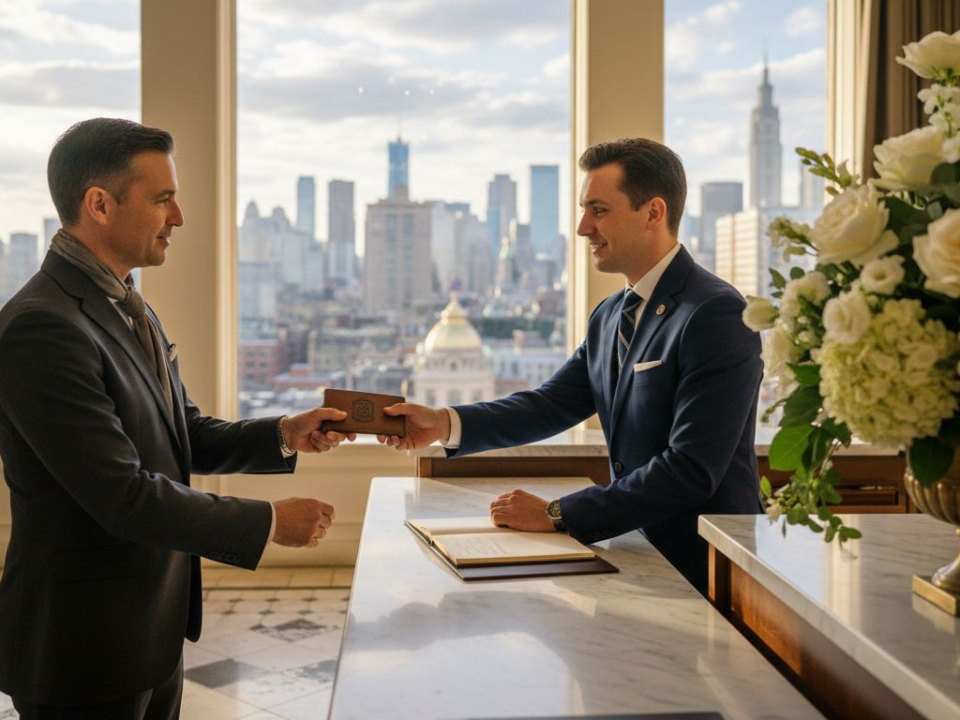
Bill presenters offer functional elegance at a critical touchpoint. The final transaction interaction shapes lasting impressions, and presenting the check in a handcrafted leather folder signals respect and attention to detail. Custom interiors can include card slots and pen loops for operational convenience without compromising aesthetics.
Room accessories extend leather’s impact beyond dining areas:
- Leather desk pads and blotters create functional workspaces in guest rooms
- Custom key card holders provide elegant branding at check-in
- Leather trays organize amenities while adding textural richness to surfaces
- Bespoke folders hold guest information and service menus with sophistication
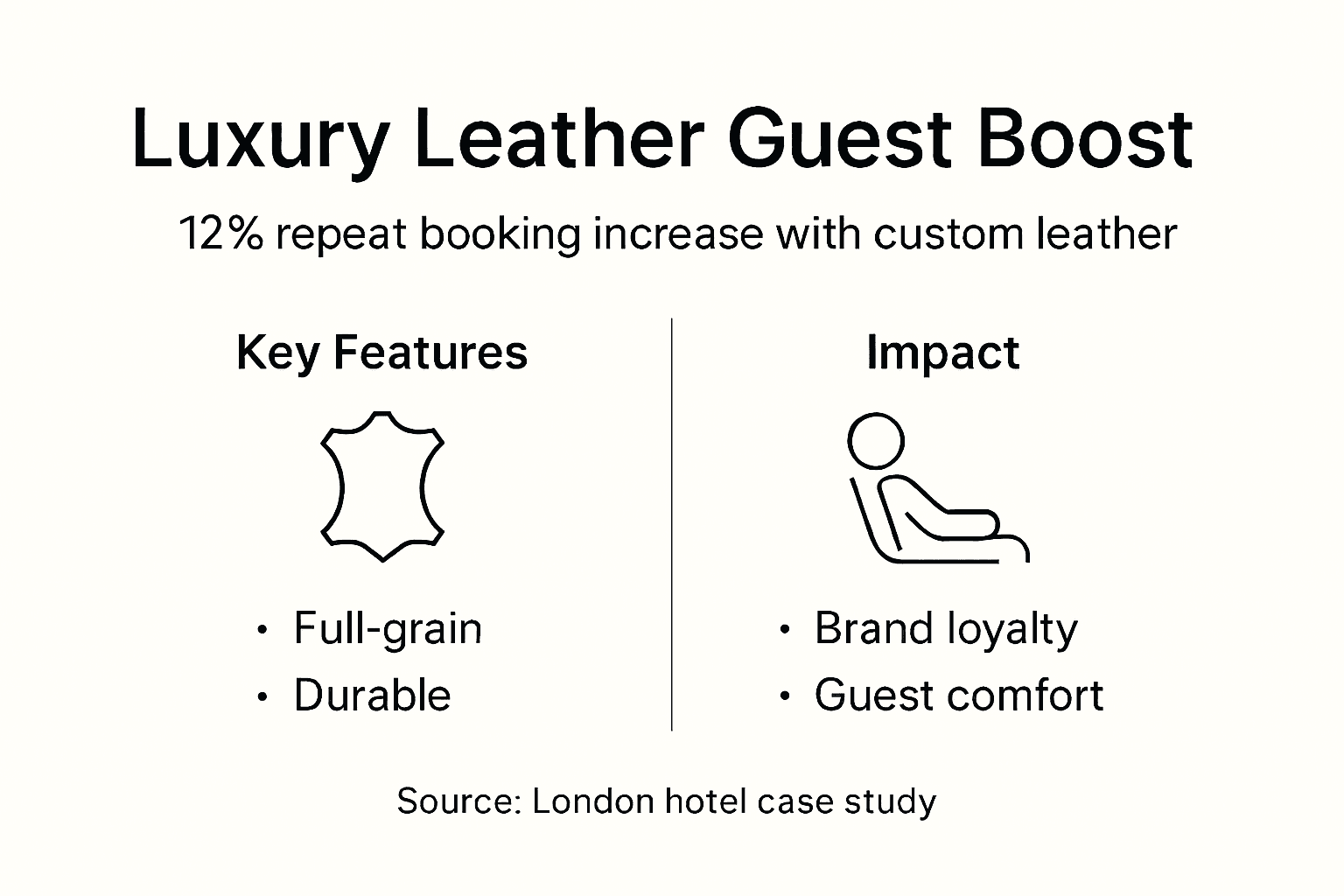
Quantified impact validates investment decisions. A London 5-star hotel reported a 12% increase in repeat bookings after introducing customised leather menu covers and coasters, demonstrating direct correlation between thoughtful material choices and guest loyalty metrics. Similar results appear in guest satisfaction scores, online reviews mentioning attention to detail, and willingness to recommend the venue to others.
Leather accessories contribute substantially to perceived exclusivity. Guests expect luxury venues to demonstrate quality through tangible details, not just marketing claims. Authentic materials like full-grain leather fulfill these expectations in ways that synthetic alternatives cannot match. The cumulative effect of coordinated leather touchpoints throughout the property amplifies brand positioning and justifies premium rates.
Recommendations for immediate implementation focus on high-impact items:
- Replace worn or synthetic menu covers with custom full-grain leather versions
- Introduce leather coasters in bars and restaurants for instant sophistication
- Upgrade bill presenters to handcrafted leather with subtle branding
- Add leather desk accessories in premium room categories
Exploring the bespoke hospitality accessories guide reveals additional applications and implementation strategies tailored to specific venue types and operational needs.
Elevate Your Venue with Bespoke Luxury Leather Accessories
Transforming insights into action starts with selecting the right partner for premium leather products. LEATHERA specializes in handcrafted leather accessories designed specifically for luxury hospitality venues across the UK. Our genuine luxury leather materials include full-grain and vegetable-tanned options in diverse colors and finishes, ensuring perfect alignment with your brand aesthetic.
Every product we create can be customized through embossing, dyeing, and bespoke sizing to reinforce your unique identity. From menu covers and coasters to bill presenters and room accessories, our bespoke leather products for hospitality deliver the durability, elegance, and tactile appeal that discerning guests expect. Expert guidance helps you navigate options and maintenance protocols, ensuring your investment performs optimally throughout its extended lifespan. Discover how our guide to selecting luxury leather accessories can help you make informed decisions that elevate guest satisfaction and strengthen your brand.
Frequently Asked Questions
What leather type lasts longest in hospitality environments?
Full-grain vegetable-tanned leather delivers superior longevity in commercial hospitality settings, often lasting 10+ years with proper maintenance. This combination retains natural grain structure for durability while benefiting from eco-friendly tanning that enhances aging characteristics.
How often should I maintain luxury leather accessories in busy venues?
Implement daily dusting, weekly gentle cleaning for high-touch items, and monthly conditioning treatments to maintain optimal appearance and performance. Environmental monitoring and quarterly deep assessments ensure early detection of any issues requiring attention.
Can bespoke leather products really impact guest loyalty?
Yes, measurably so. Customized leather accessories create distinctive brand touchpoints that guests remember and appreciate, directly influencing repeat booking decisions and recommendation likelihood. The 12% increase in repeat bookings reported by luxury London hotels demonstrates tangible business impact.
Is synthetic leather ever a good choice for luxury hospitality?
No, synthetic materials lack the breathability, durability, and aging characteristics essential for authentic luxury positioning. Guests immediately recognize the difference in tactile experience and visual quality, undermining brand perception and requiring frequent replacement.
What sustainability certifications should I look for when sourcing leather?
Leather Working Group membership indicates commitment to environmental best practices throughout the supply chain. ISO 14001 certification demonstrates verified environmental management systems, providing assurance that sustainability claims are legitimate and protecting your brand reputation.